Lume
Lume
Lume is an AR system designed for motorcycle helmets that helps riders stay safe by detecting cars in their blind spots. It was developed as part of a VR simulation in Unity to recreate real road situations and demonstrate how the system would work in real-time. Lume improves the rider’s awareness of their surroundings especially in hard-to-see areas by displaying visual alerts inside the helmet when a vehicle enters the blind spot. The system also shows key ride information like speed and fuel level, all within the rider’s line of sight, so there's no need to look away from the road. To make the experience more immersive and interactive, we also built a physical bike handle using Arduino, which allowed users to navigate the AR space more naturally during the simulation. This added a tangible layer of control and made the experience feel closer to real-life riding.
Lume is an AR system designed for motorcycle helmets that helps riders stay safe by detecting cars in their blind spots. It was developed as part of a VR simulation in Unity to recreate real road situations and demonstrate how the system would work in real-time. Lume improves the rider’s awareness of their surroundings especially in hard-to-see areas by displaying visual alerts inside the helmet when a vehicle enters the blind spot. The system also shows key ride information like speed and fuel level, all within the rider’s line of sight, so there's no need to look away from the road. To make the experience more immersive and interactive, we also built a physical bike handle using Arduino, which allowed users to navigate the AR space more naturally during the simulation. This added a tangible layer of control and made the experience feel closer to real-life riding.
Lume is an AR system designed for motorcycle helmets that helps riders stay safe by detecting cars in their blind spots. It was developed as part of a VR simulation in Unity to recreate real road situations and demonstrate how the system would work in real-time. Lume improves the rider’s awareness of their surroundings especially in hard-to-see areas by displaying visual alerts inside the helmet when a vehicle enters the blind spot. The system also shows key ride information like speed and fuel level, all within the rider’s line of sight, so there's no need to look away from the road. To make the experience more immersive and interactive, we also built a physical bike handle using Arduino, which allowed users to navigate the AR space more naturally during the simulation. This added a tangible layer of control and made the experience feel closer to real-life riding.
Group / Individual
Group / Individual
Group / Individual
Group Project with Sahil Islam, Wayne Kim and Felix Lorsignol
Group Project with Sahil Islam, Wayne Kim and Felix Lorsignol
Group Project with Sahil Islam, Wayne Kim and Felix Lorsignol
Location
Location
Location
Copenhagen Institute of Interaction Design (Bergamo, Italy)
Copenhagen Institute of Interaction Design (Bergamo, Italy)
Copenhagen Institute of Interaction Design (Bergamo, Italy)
Course
Course
Course
Spatial Computing (Lecturers : Ricardo Acosta and David Rose)
Spatial Computing (Lecturers : Ricardo Acosta and David Rose)
Spatial Computing (Lecturers : Ricardo Acosta and David Rose)
Duration
Duration
Duration
2025. 2. 24 ~ 2. 28 (5 days)
2025. 2. 24 ~ 2. 28 (5 days)
2025. 2. 24 ~ 2. 28 (5 days)
Role
Role
Role
Unity, Physical Computing, 3D Modeling
Unity, Physical Computing, 3D Modeling
Unity, Physical Computing, 3D Modeling
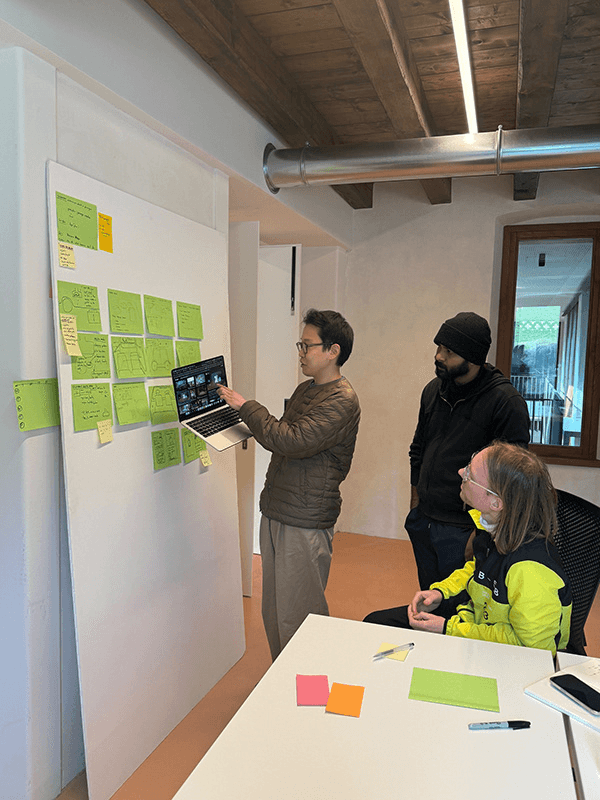
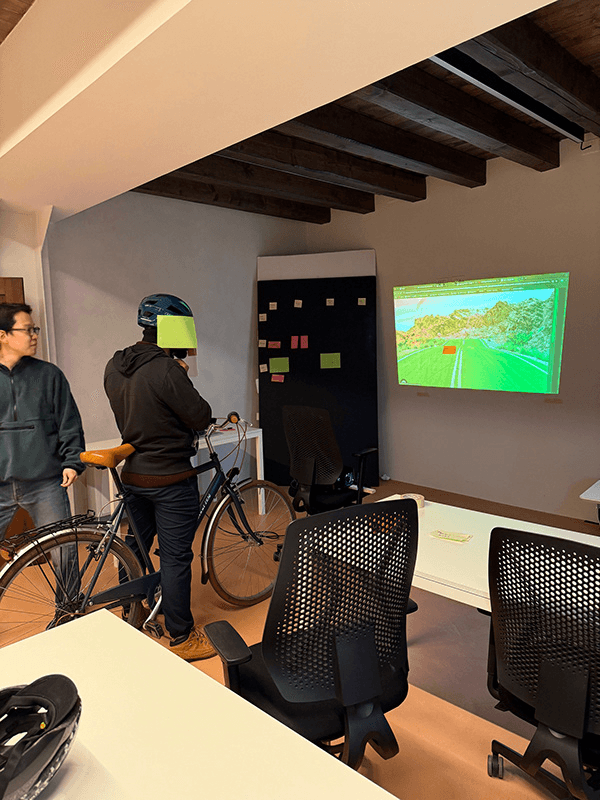
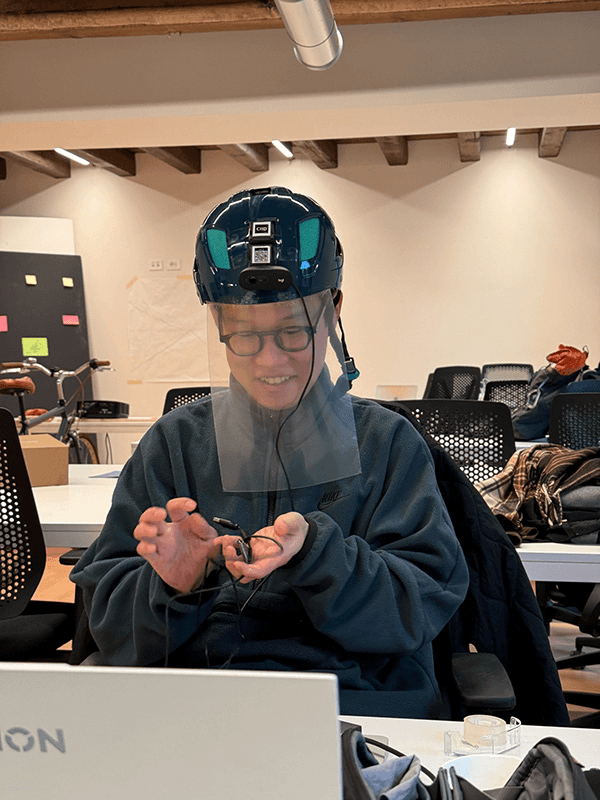
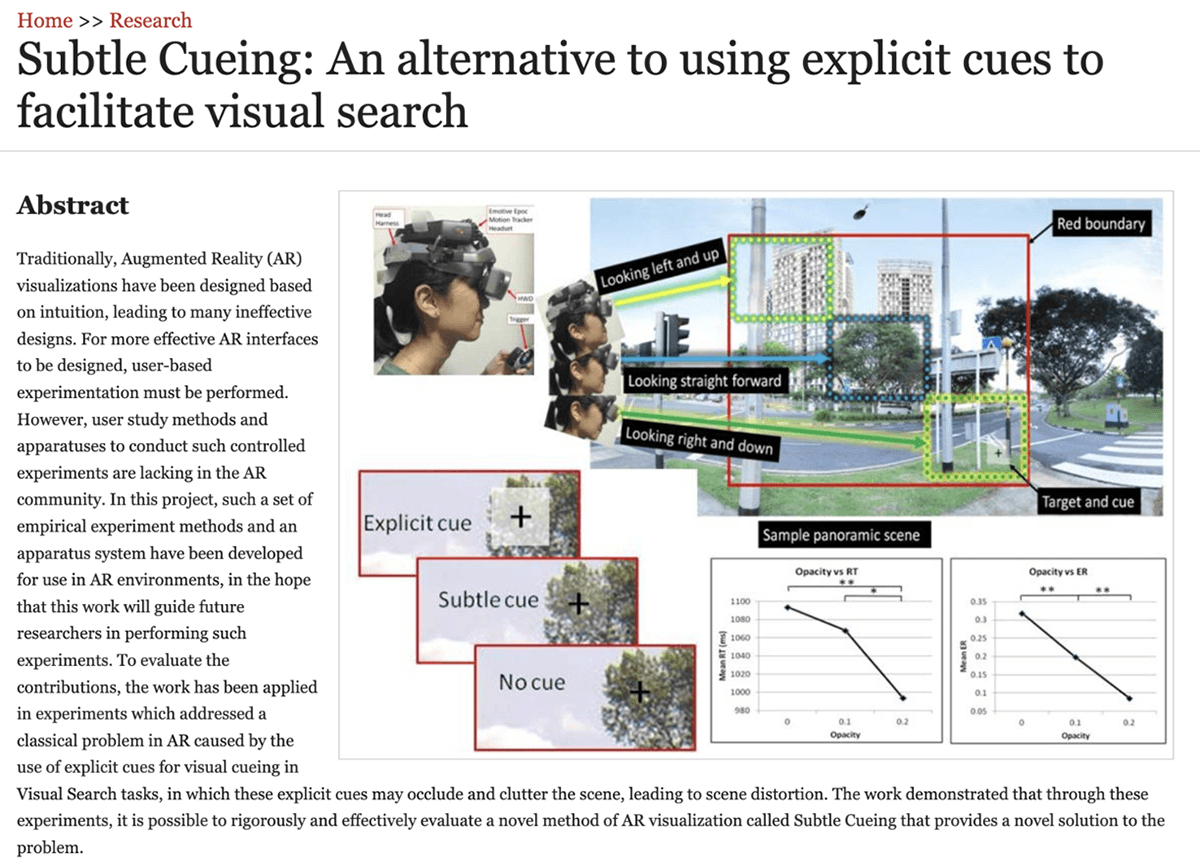
In class, we were tasked with designing a spatial computing product for transportation. After exploring ideas to address blind spots caused by motorcycle helmets’ limited visibility, we considered using the helmet’s transparent windshield as a display. Interviews with three campus motorcyclists revealed they preferred subtle information displays, as prominent graphics could interfere with riding. Also we found a research paper related to our insight that explicit cues distract people.
Research source : https://www-users.cse.umn.edu/~qzhao/subtlecueing.html
In class, we were tasked with designing a spatial computing product for transportation. After exploring ideas to address blind spots caused by motorcycle helmets’ limited visibility, we considered using the helmet’s transparent windshield as a display. Interviews with three campus motorcyclists revealed they preferred subtle information displays, as prominent graphics could interfere with riding. Also we found a research paper related to our insight that explicit cues distract people.
Research source :
In class, we were tasked with designing a spatial computing product for transportation. After exploring ideas to address blind spots caused by motorcycle helmets’ limited visibility, we considered using the helmet’s transparent windshield as a display. Interviews with three campus motorcyclists revealed they preferred subtle information displays, as prominent graphics could interfere with riding. Also we found a research paper related to our insight that explicit cues distract people.
Research source : https://www-users.cse.umn.edu/~qzhao/subtlecueing.html
\We created a testing environment for our AR design concept by integrating Unity, Arduino, potentiometer, and Meta Quest 3
We created a testing environment for our AR design concept by integrating Unity, Arduino, potentiometer, and Meta Quest 3
\We created a testing environment for our AR design concept by integrating Unity, Arduino, potentiometer, and Meta Quest
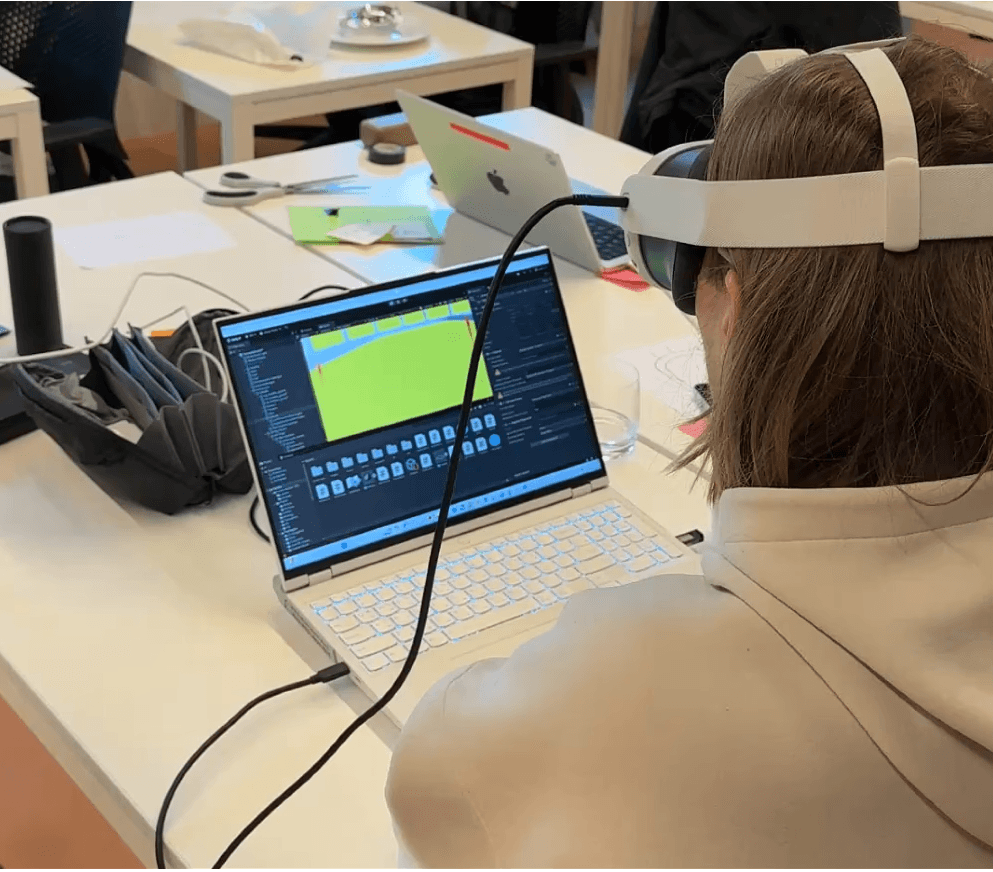
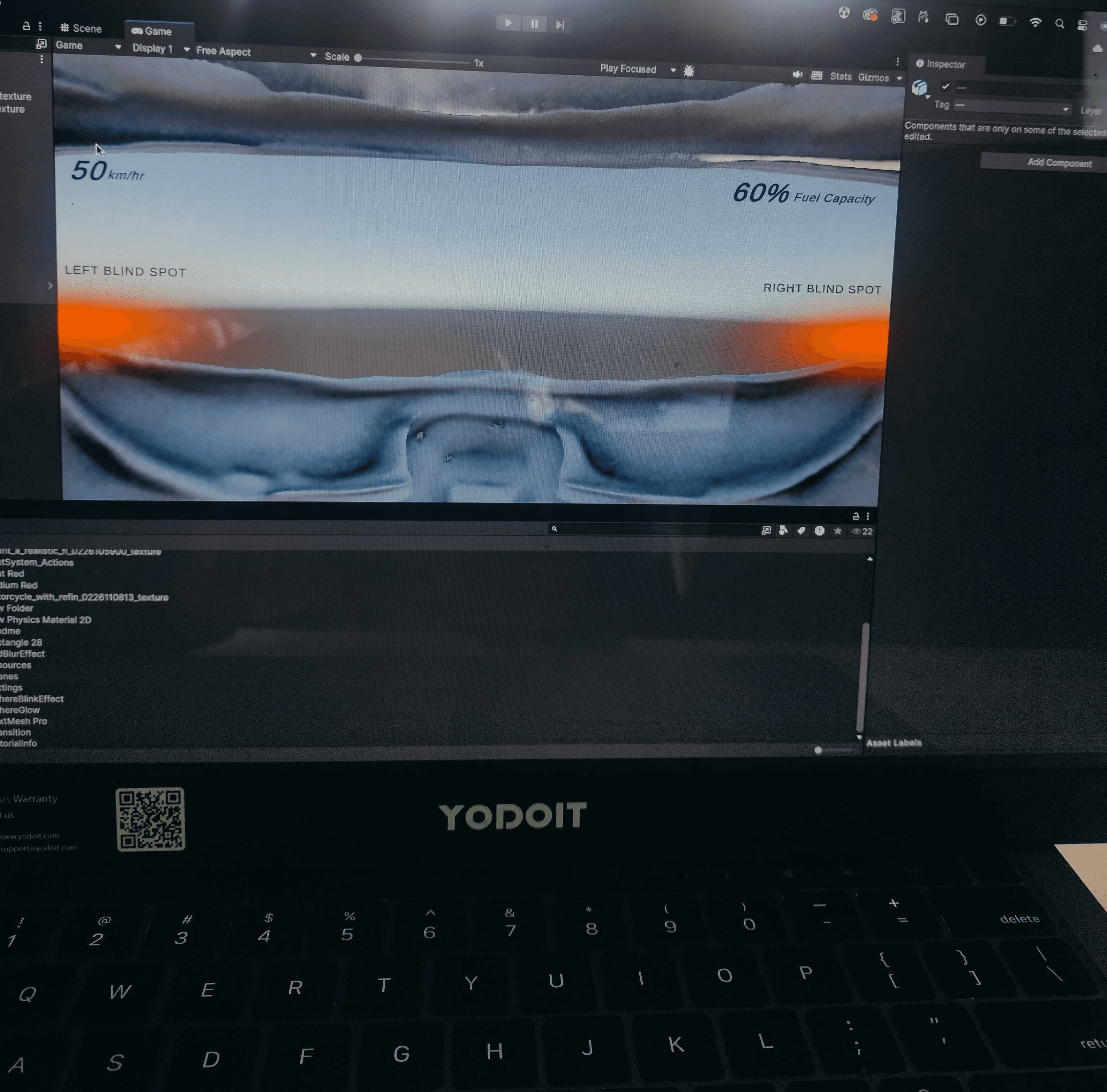
We developed multiple versions of blind spot alert indicators with red light expressions and evaluated them based on whether they were distracting, confusing, or too subtle to notice
We developed multiple versions of blind spot alert indicators with red light expressions and evaluated them based on whether they were distracting, confusing, or too subtle to notice
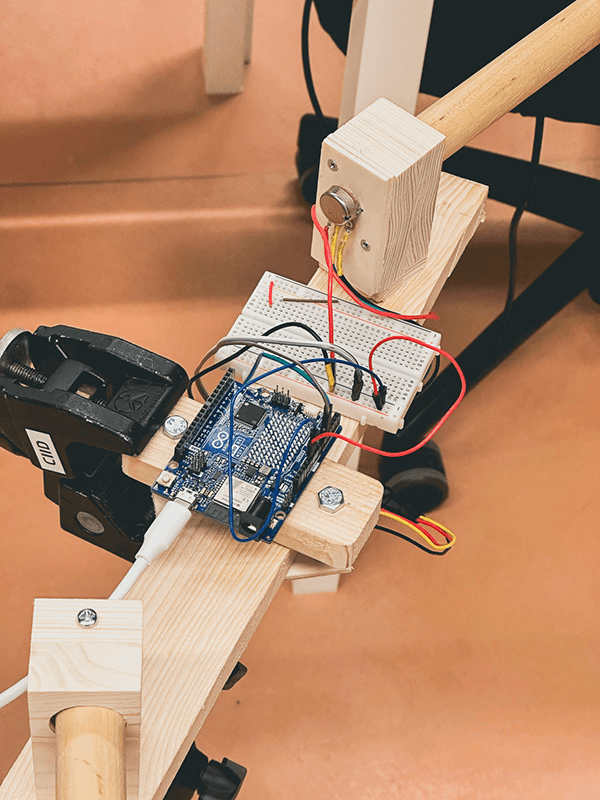
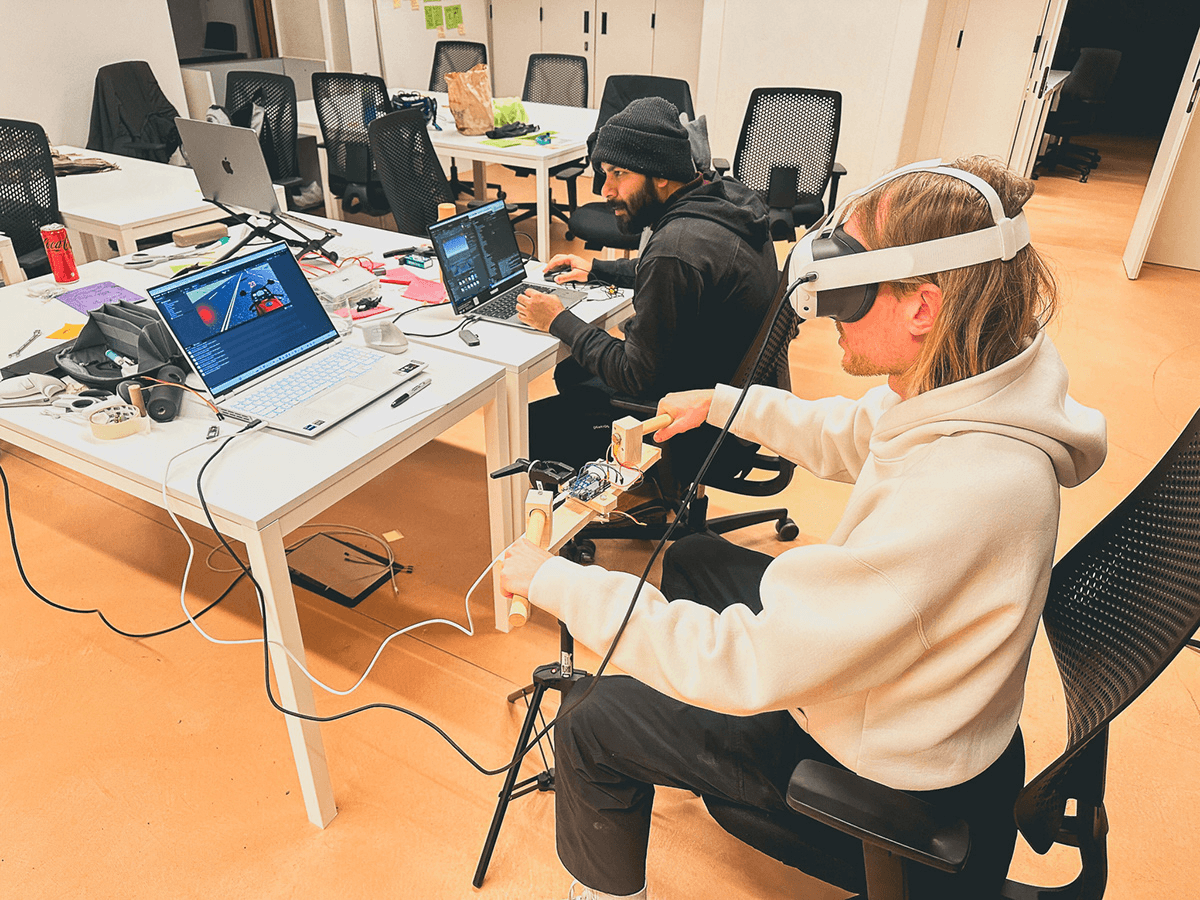
In the final stage, we built a physical handlebar using Arduino and a potentiometer to control the direction and speed of a virtual motorcycle. Using Blender(created by Felix) and open-source 3D models, we created a road for riding and added moving cars to complete the virtual environment.
In the final stage, we built a physical handlebar using Arduino and a potentiometer to control the direction and speed of a virtual motorcycle. Using Blender(created by Felix) and open-source 3D models, we created a road for riding and added moving cars to complete the virtual environment.
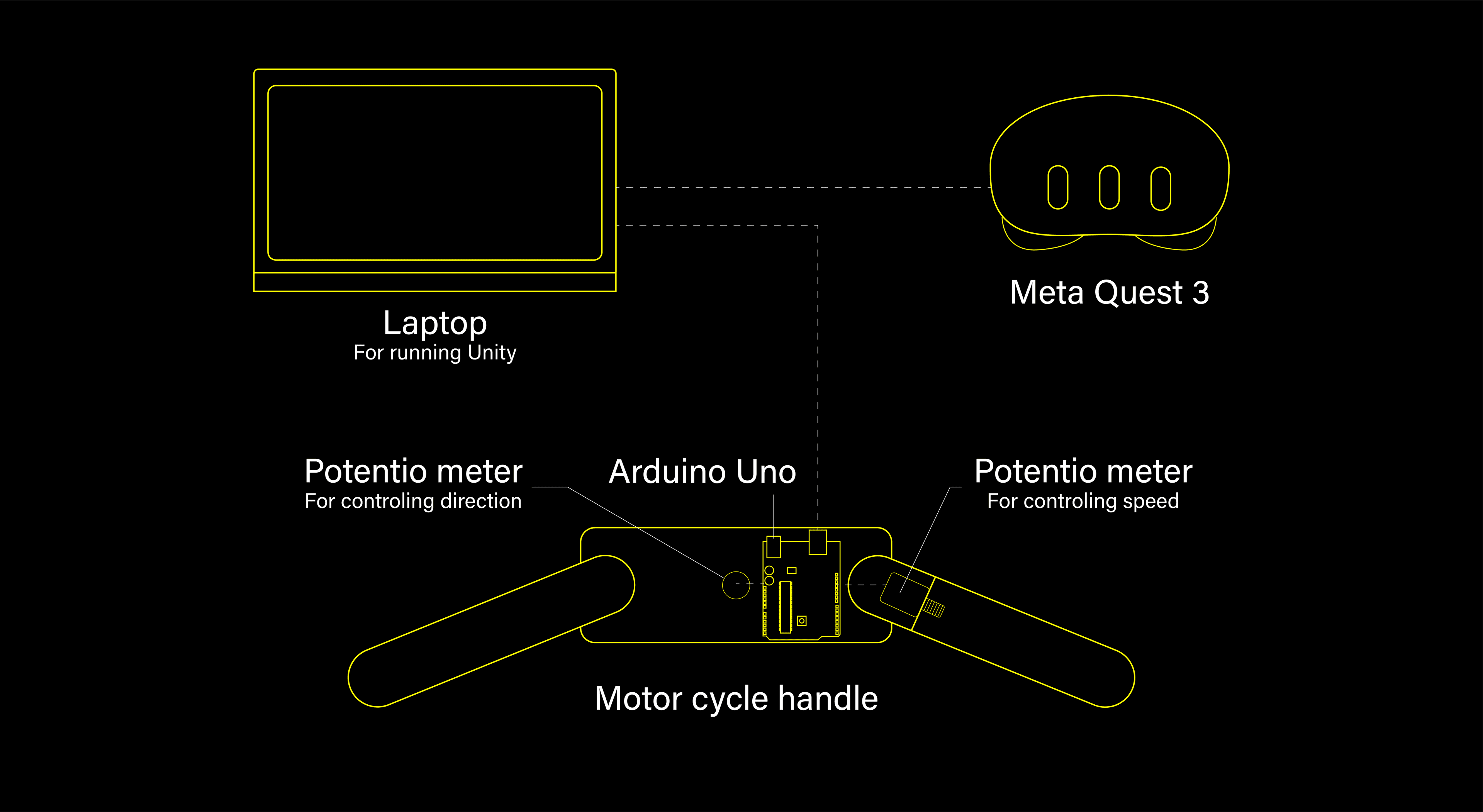
< Technology Configuration >
< Technology Configuration >
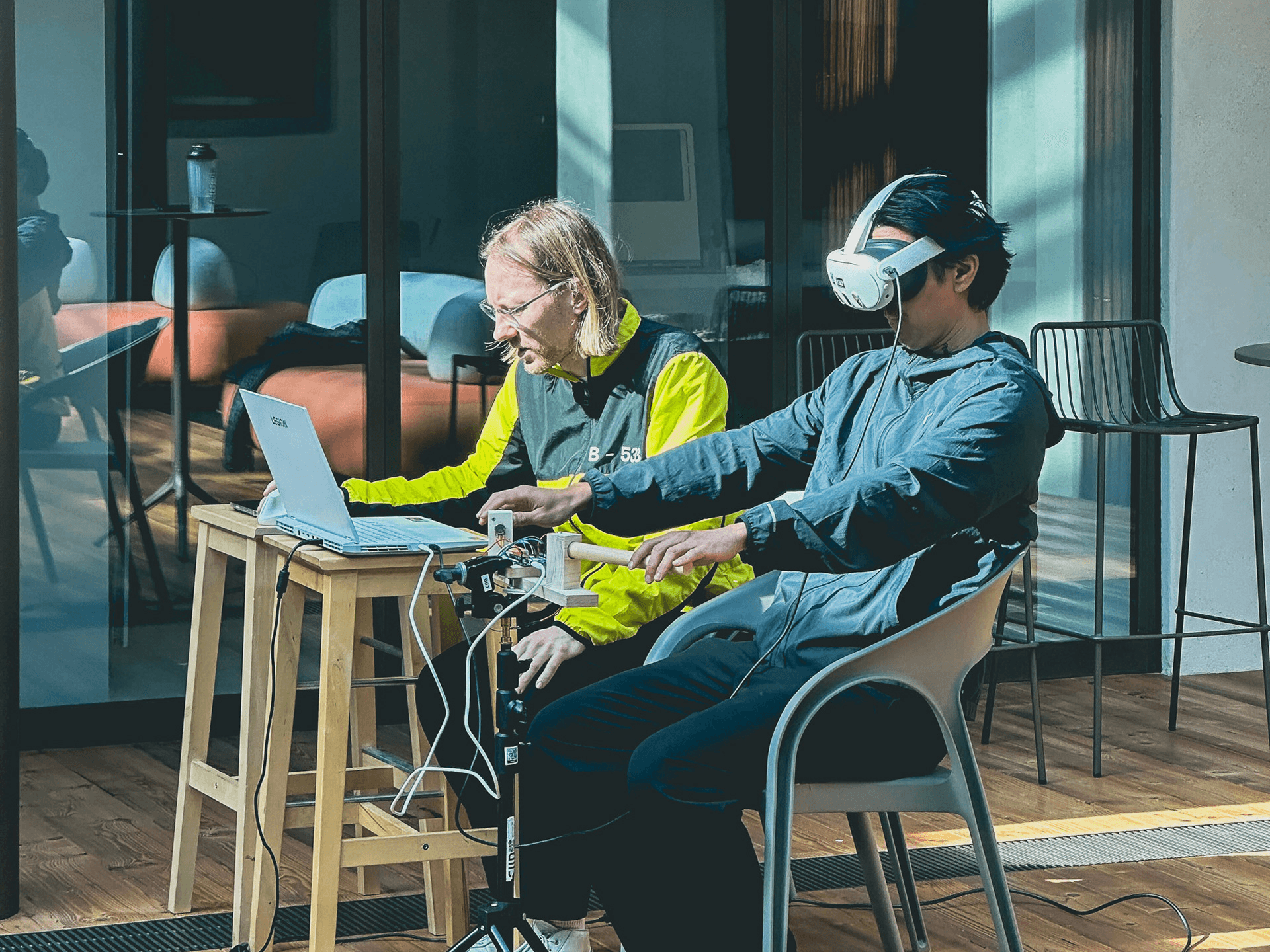
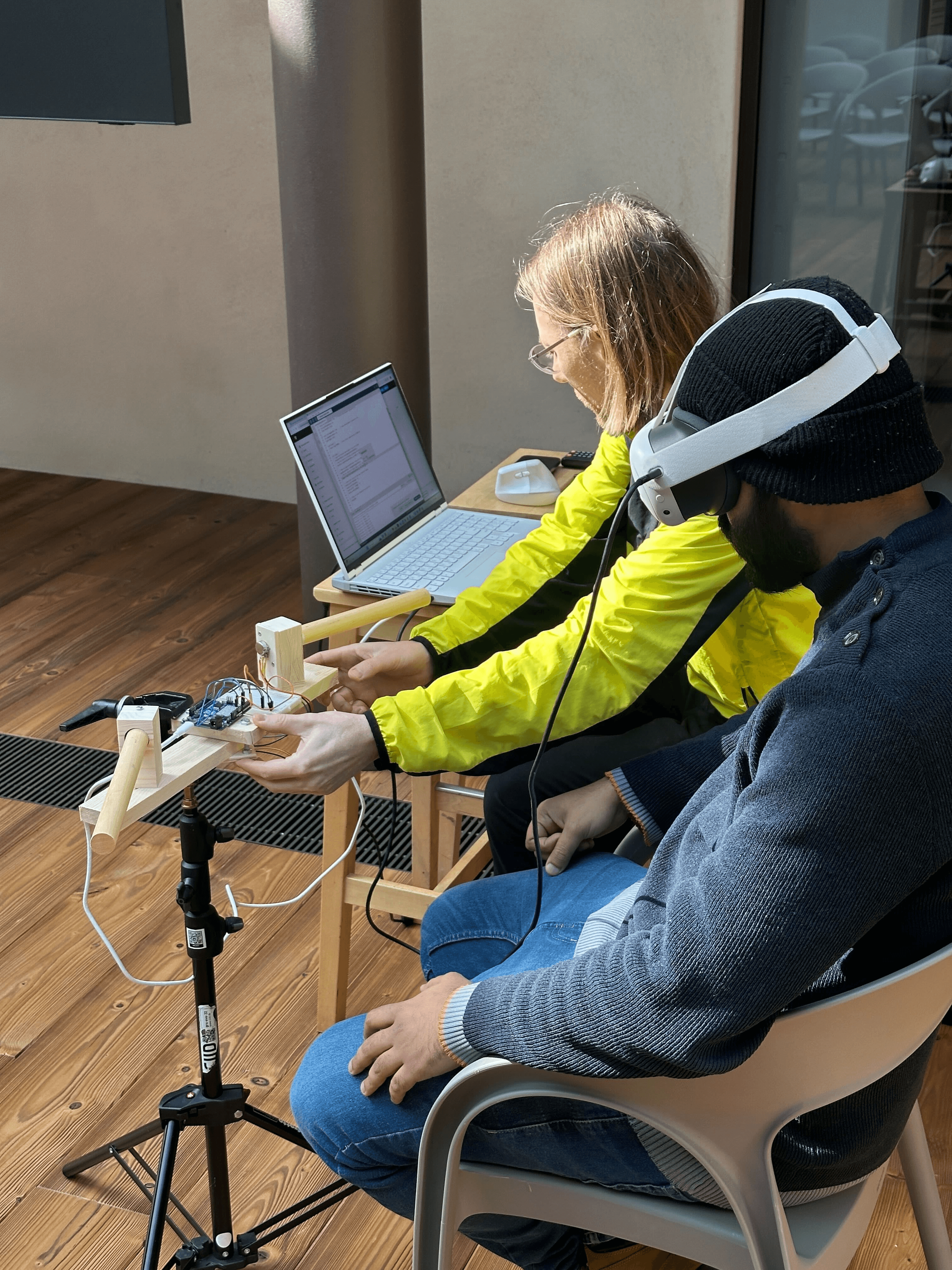
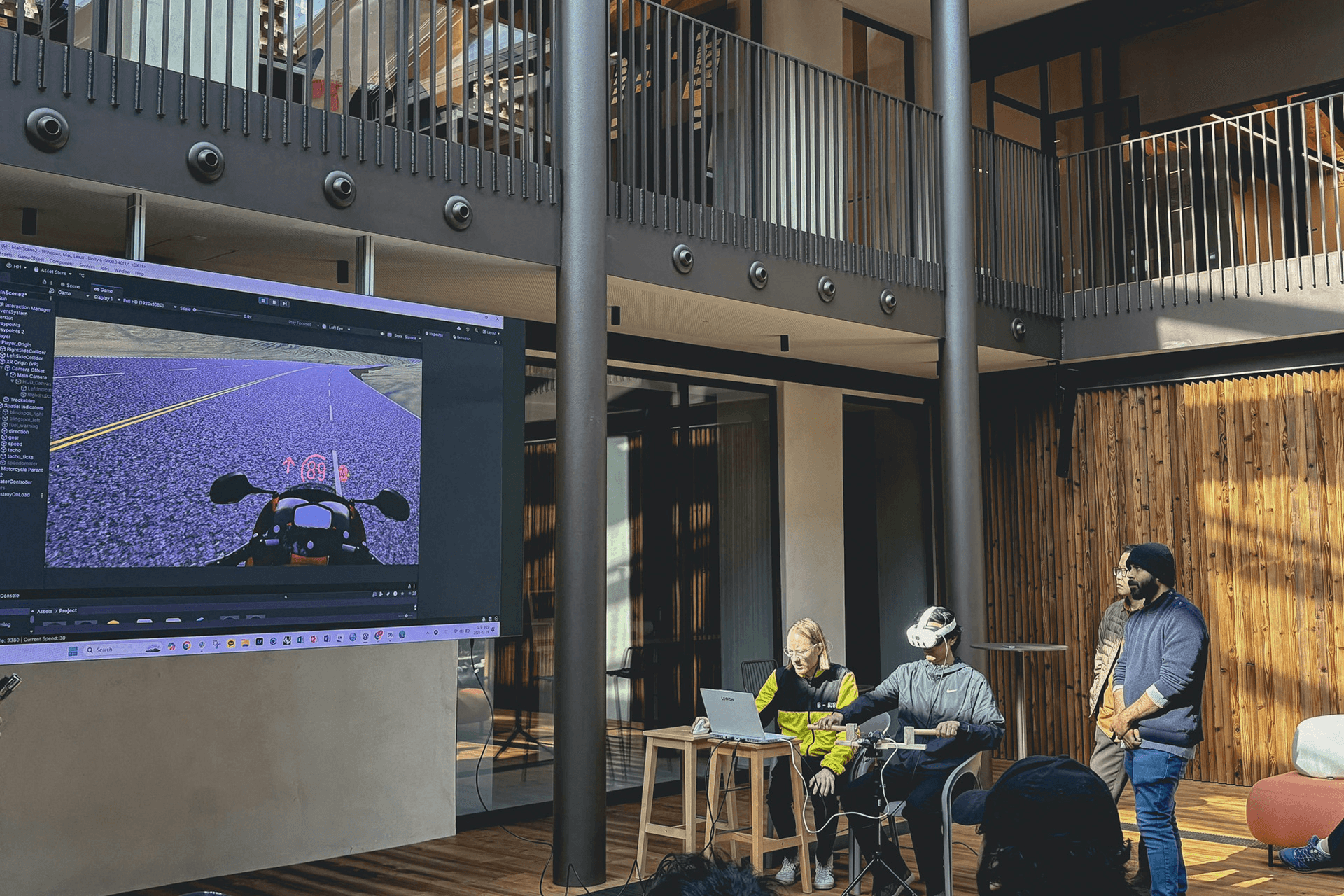
< Live Demo >
< Live Demo >