Doughy
Doughy

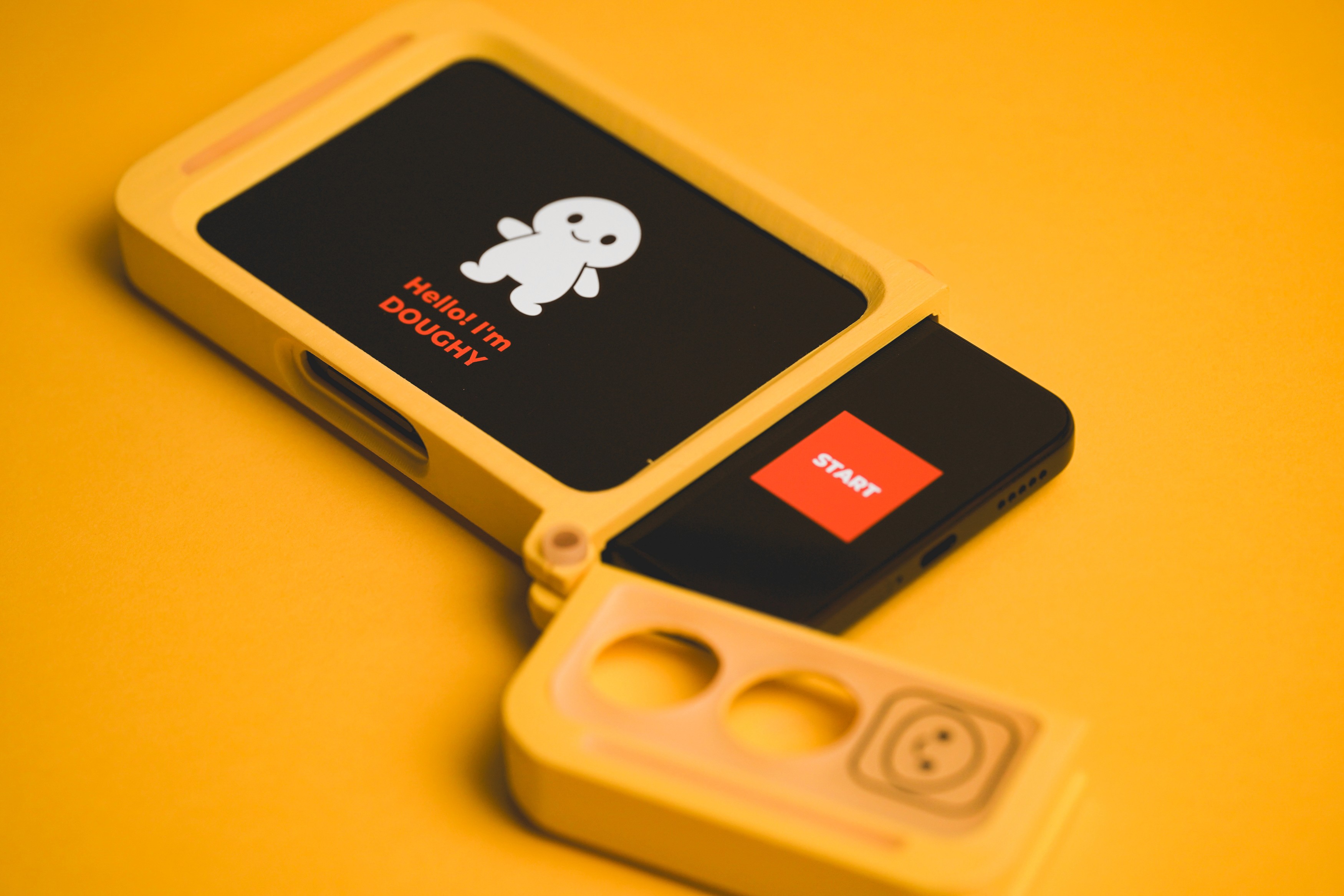
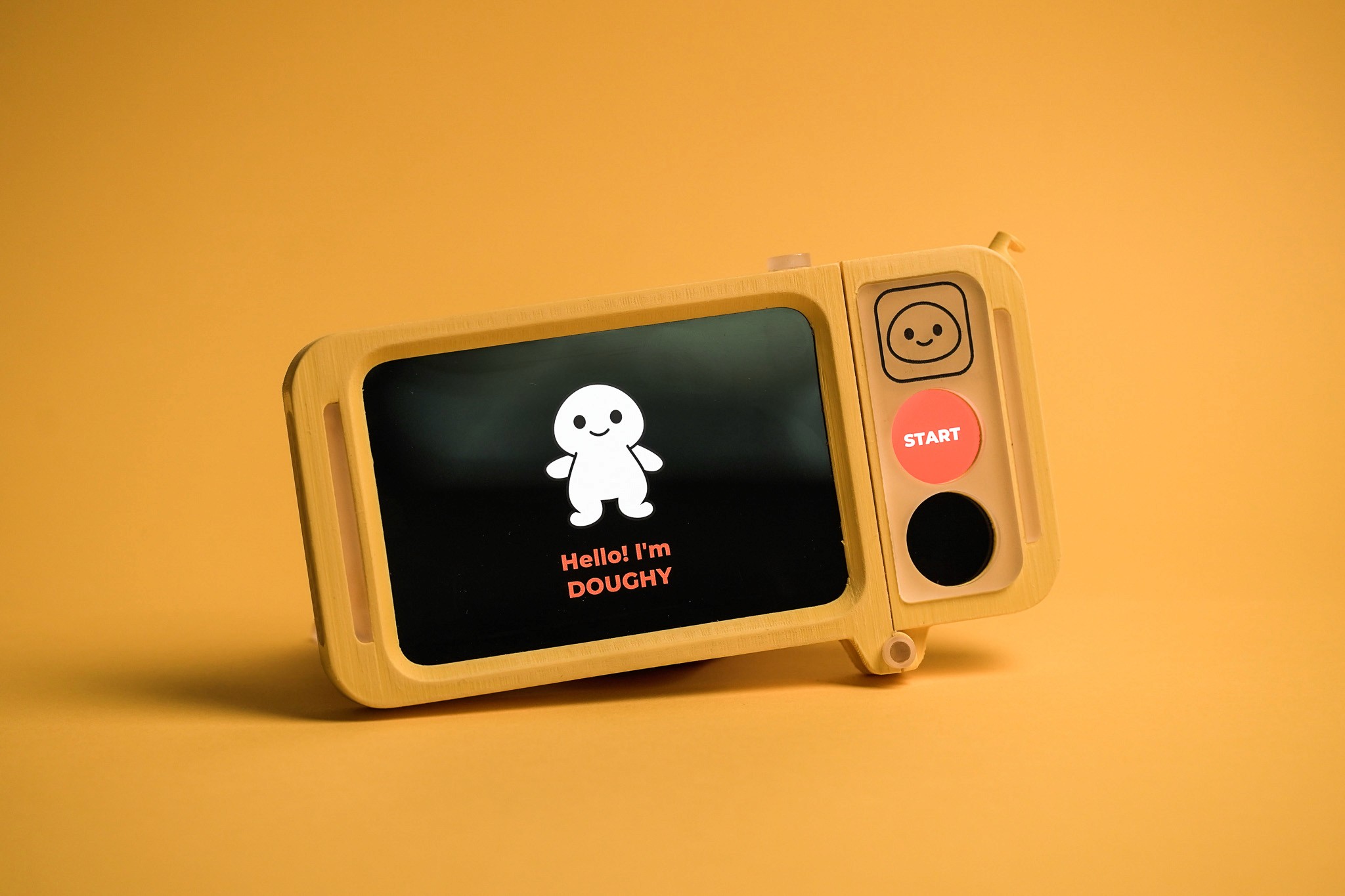
Doughy is a creative tool that helps parents and children make story-driven videos together. It offers playful prompts and a simple structure for co-creation, guiding families from passive smartphone use toward meaningful connection. When a phone is placed in the Doughy case, the app launches automatically. Parents and children select emojis to reflect their feelings, sparking a story they act out using props and AR effects.
Doughy is a creative tool that helps parents and children make story-driven videos together. It offers playful prompts and a simple structure for co-creation, guiding families from passive smartphone use toward meaningful connection. When a phone is placed in the Doughy case, the app launches automatically. Parents and children select emojis to reflect their feelings, sparking a story they act out using props and AR effects.
Doughy is a creative tool that helps parents and children make story-driven videos together. It offers playful prompts and a simple structure for co-creation, guiding families from passive smartphone use toward meaningful connection. When a phone is placed in the Doughy case, the app launches automatically. Parents and children select emojis to reflect their feelings, sparking a story they act out using props and AR effects.
Group / Individual
Group / Individual
Individual Project
Individual Project
Individual Project
Location
Location
Copenhagen Institute of Interaction Design (Bergamo, Italy)
Copenhagen Institute of Interaction Design (Bergamo, Italy)
Copenhagen Institute of Interaction Design (Bergamo, Italy)
Course
Course
Course
Final Project (Advisors : Chris Downs, Jose Chavarria and Reuben Jerome D'silva)
Final Project (Advisors : Chris Downs, Jose Chavarria and Reuben Jerome D'silva)
Final Project (Advisors : Chris Downs, Jose Chavarria and Reuben Jerome D'silva)
Duration
Duration
2025. 04 ~ 06 (2 months)
2025. 04 ~ 06 (2 months)
2025. 04 ~ 06 (2 months)
Role
Role
User Research, Unity, Python, Prototyping, 3D Modeling, Videography
User Research, Unity, Python, Prototyping, 3D Modeling, Videography
User Research, Unity, Python, Prototyping, 3D Modeling, Videography
1
1
Story Making
Story Making
2
2
Listening to Stories
Listening to Stories
3
3
Recording Scenes
Recording Scenes
3.5
Loading next scenes
3.5 Loading next scenes
4
4
Watching Video
Watching Video
Doughy is composed of four main stages: story making, listening to stories, recording scenes, and watching the final video. By progressing through these steps in order, a video collaboratively created by the parent and child is completed.
Doughy is composed of four main stages: story making, listening to stories, recording scenes, and watching the final video. By progressing through these steps in order, a video collaboratively created by the parent and child is completed.
Doughy is composed of four main stages: story making, listening to stories, recording scenes, and watching the final video. By progressing through these steps in order, a video collaboratively created by the parent and child is completed.
1
Story Making
2
Listening to Stories
3
Recording Scenes
3.5 Loading next scenes
4
Watching Video
Story Making
Story Making
1. Story Making
The first step where users select the number of players and today’s emotion to generate a story. Story generation retrieves one of the pre-saved stories based on the selected information
The first step where users select the number of players and today’s emotion to generate a story. Story generation retrieves one of the pre-saved stories based on the selected information
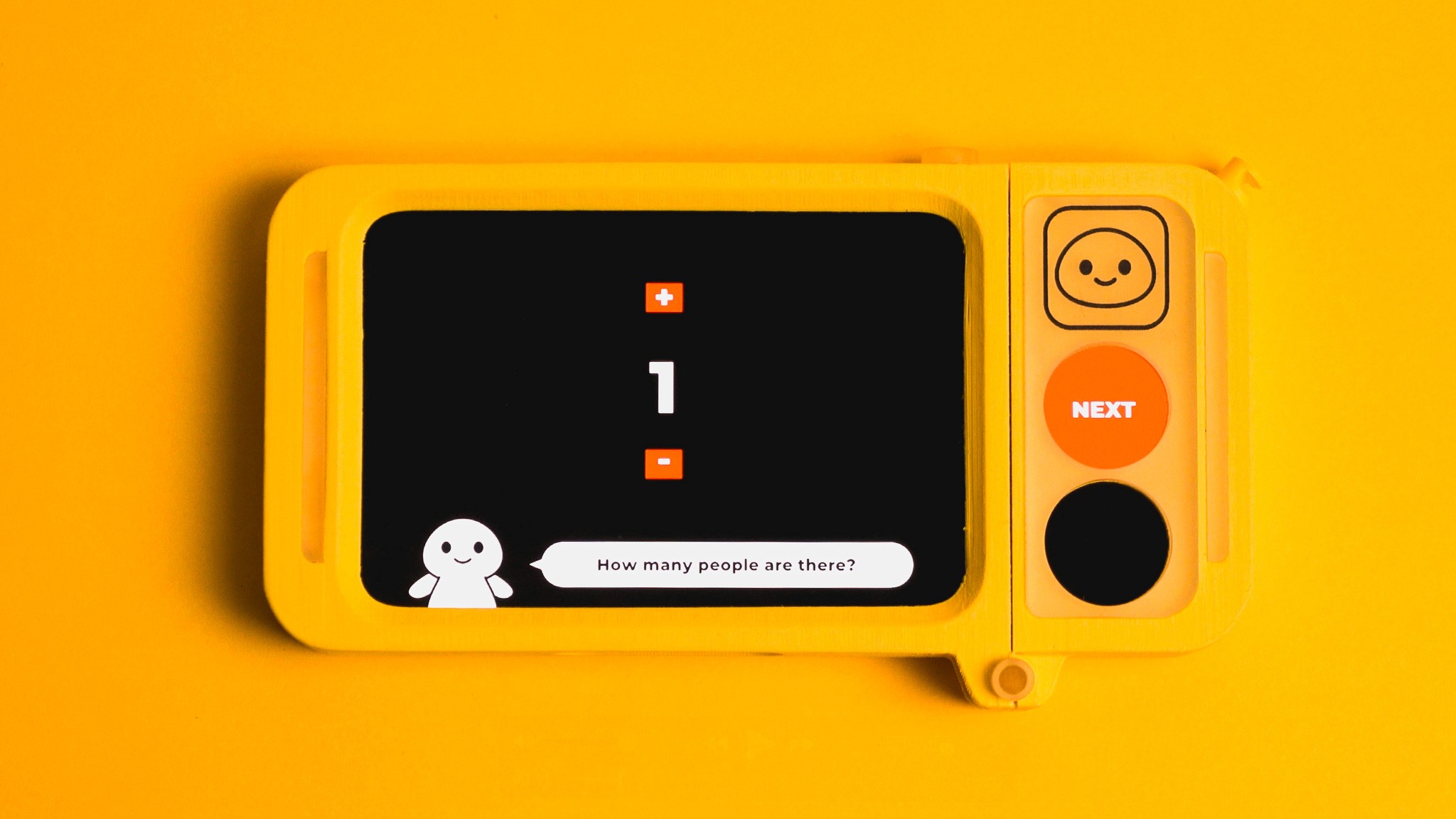
Number of people
Number of people
Deciding number of roles for stories
Deciding number of roles for stories
Deciding number of roles for stories
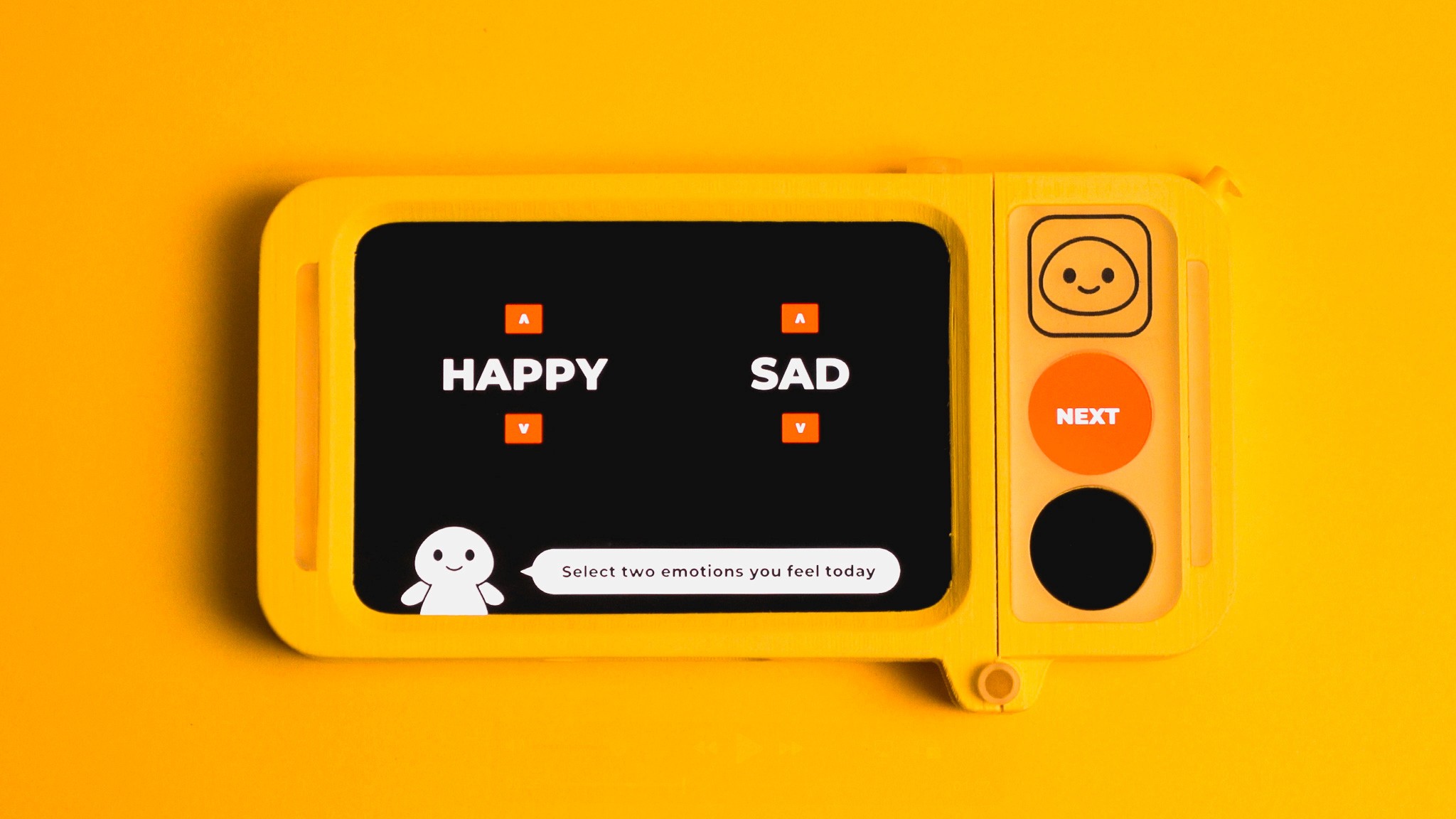
Choosing emotions of today
Choosing emotions of today
Deciding stories related to emotions
Moments to share each other's feelings
Deciding stories related to emotions
Moments to share each other's feelings
Listening to Stories
Listening to Stories
2. Listening to Stories
Users select characters from the generated story and listen to it scene by scene
Users select characters from the generated story and listen to it scene by scene
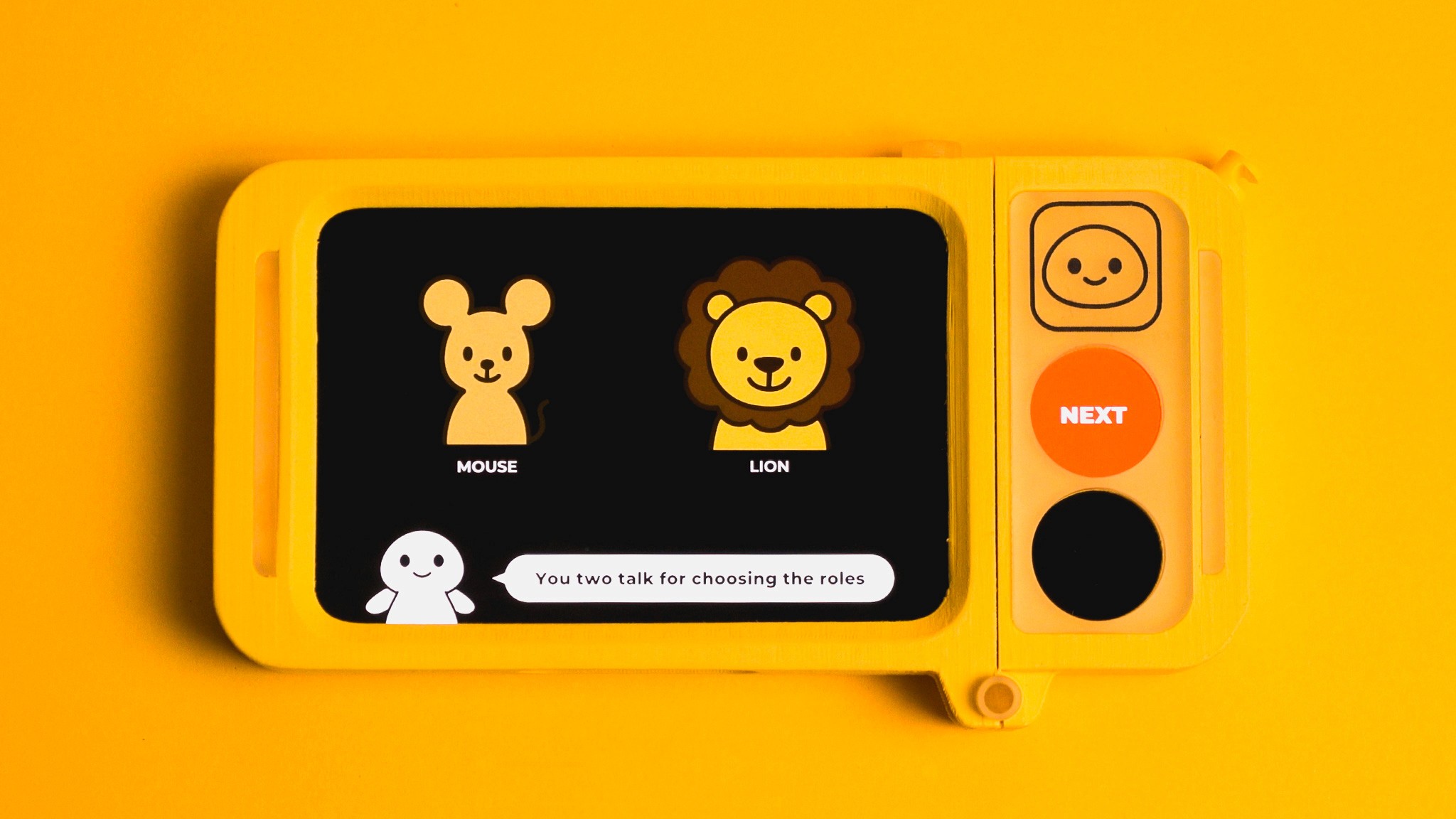
Choosing roles
Choosing roles
Allowing space to discuss on equal roles
Allowing space to discuss on equal roles
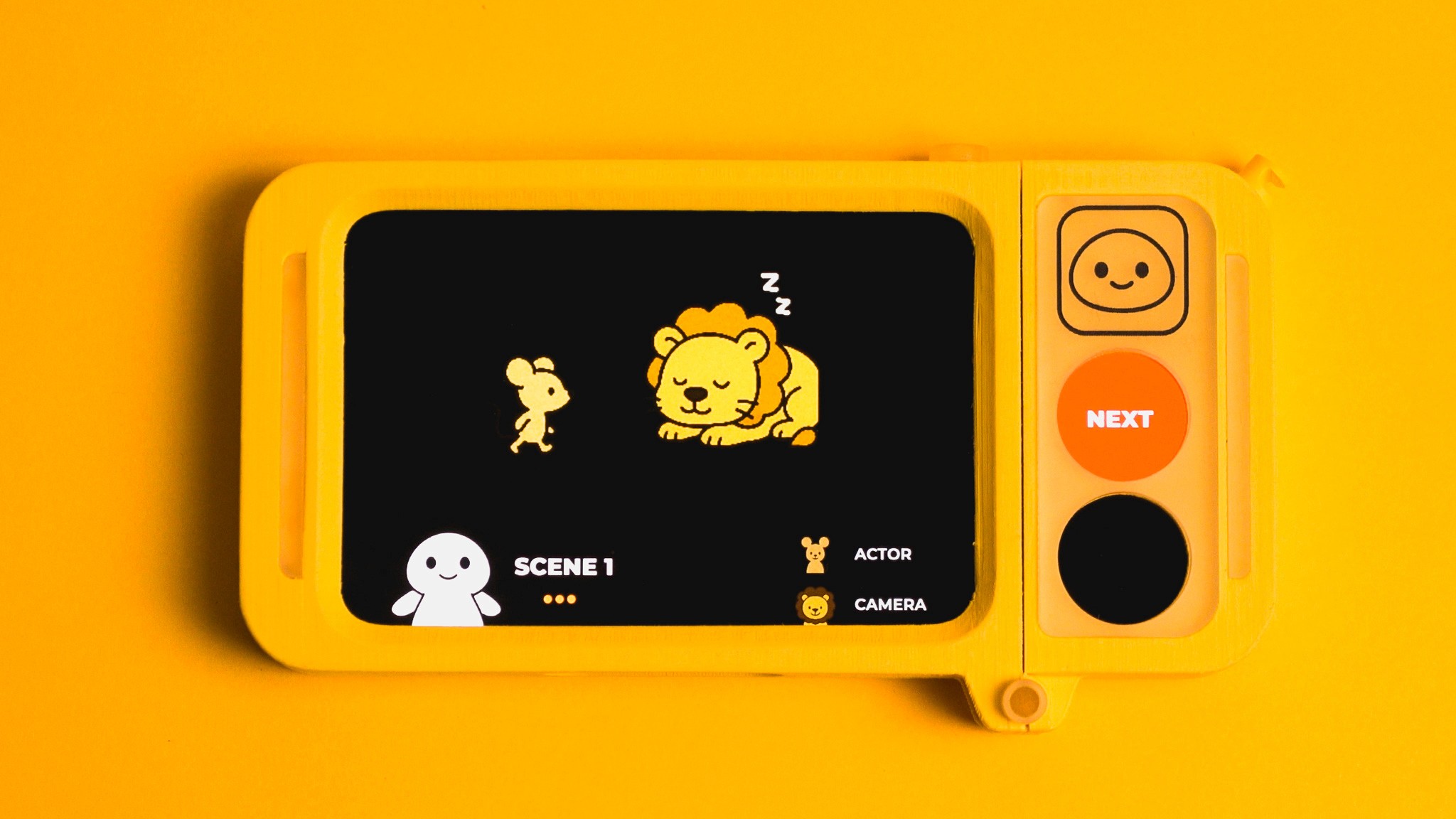
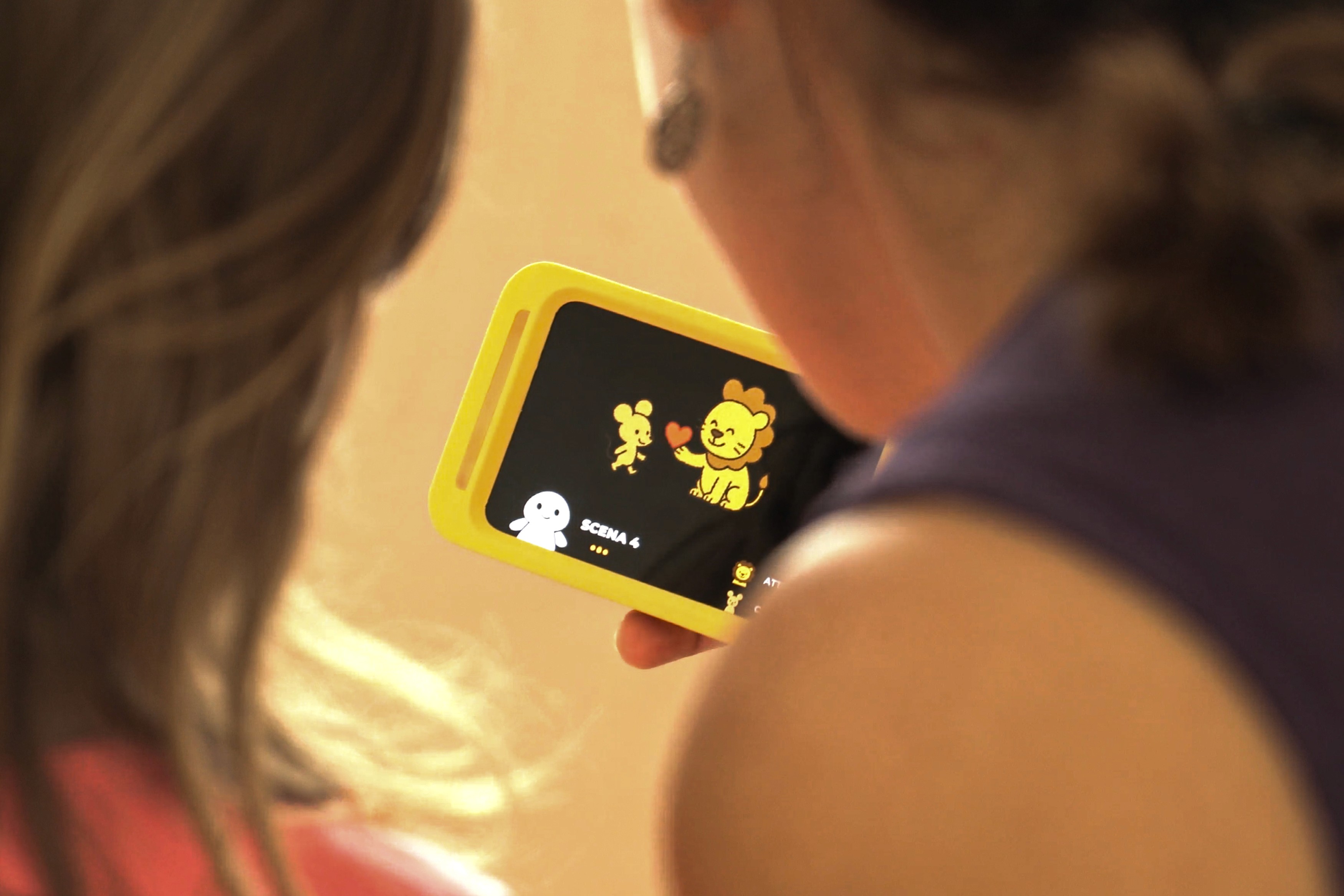
Listening to stories of scenes
Listening to stories of scenes
Prompting to think about their roles
Prompting to think about their roles
Recording Scenes
Recording Scenes
3. Recording Scenes
Users record a video based on the generated scene
Users record a video based on the generated scene
Action guide
Action guide
Provides guide on actions that can be used during role play
Provides guide on actions that can be used during role play
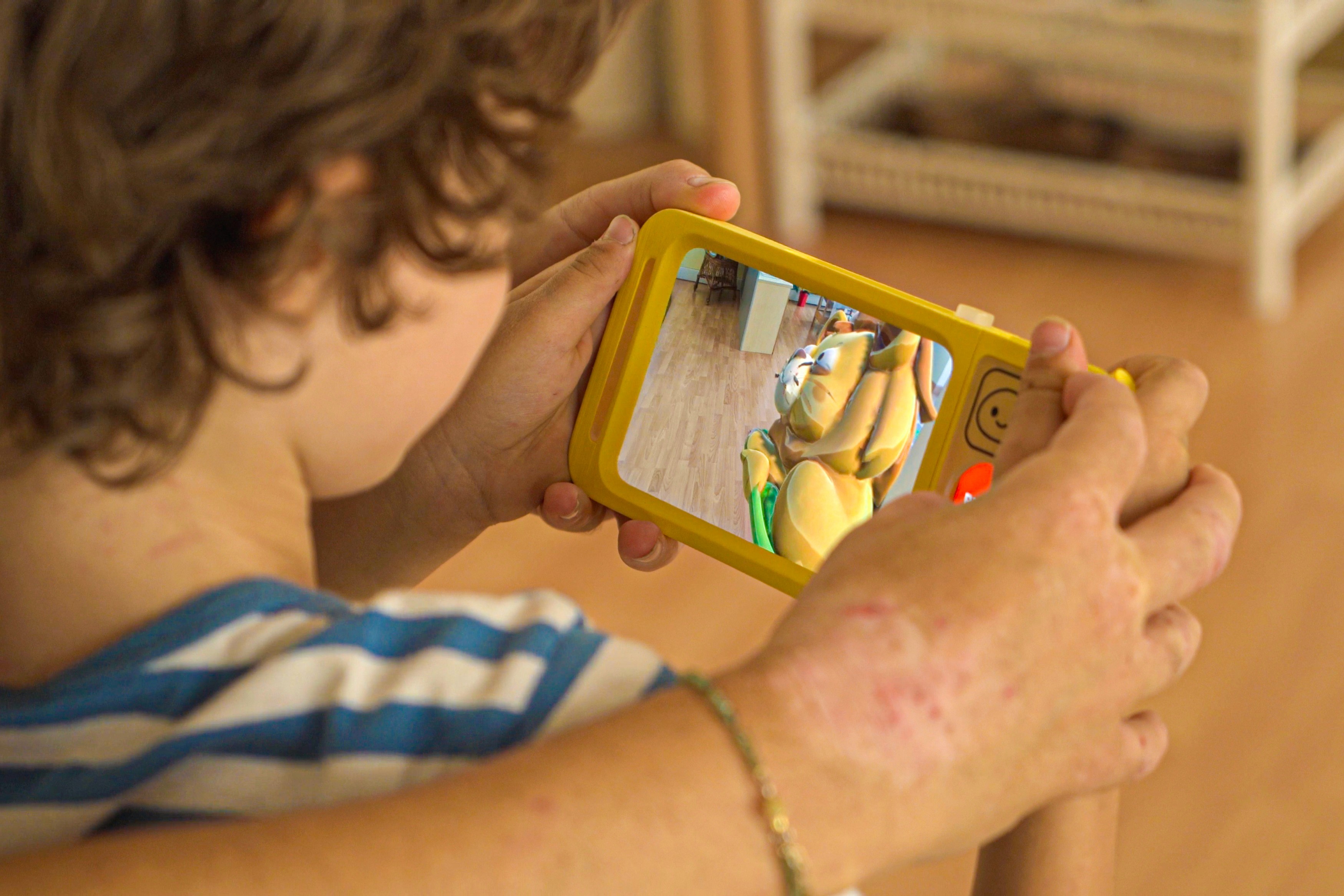
Using AR Object
Using AR Object
Allows filming with characters that appear in the actual story
Allows filming with characters that appear in the actual story
3.5. Loading Next Scenes
3.5. Loading Next Scenes
3.5. Loading Next Scenes
A transition between recording one scene and listening to the next
A transition between recording one scene and listening to the next
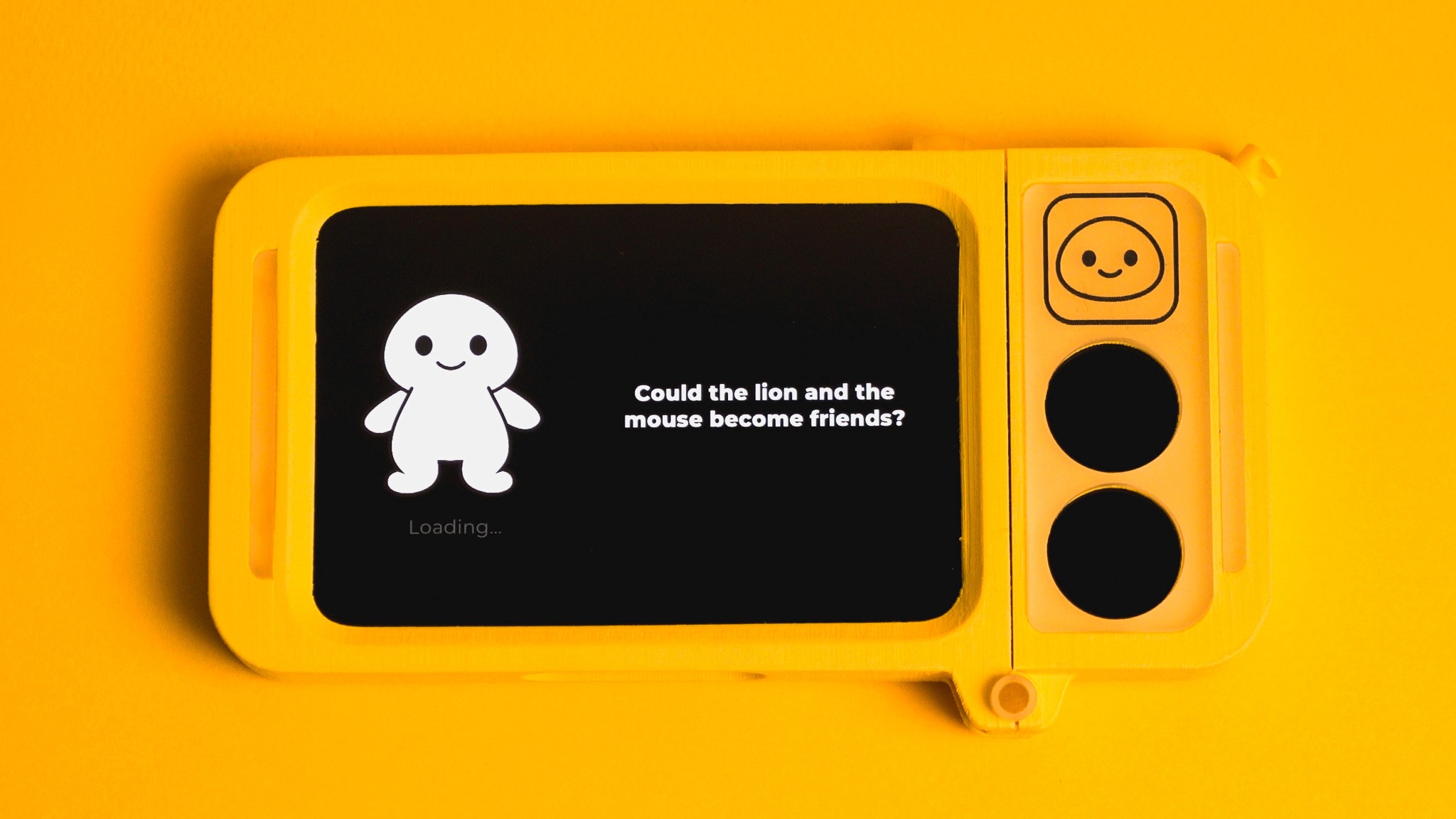
A question about next scenes
A question about next scenes
Turning the waiting time into a moment to discuss questions
Turning the waiting time into a moment to discuss questions
Deciding stories related to emotions
Moments to share each other's feelings
Watching Video
Watching Video
4. Watching Video
All recorded scenes are combined with music into a single finished video for viewing
All recorded scenes are combined with music into a single finished video for viewing
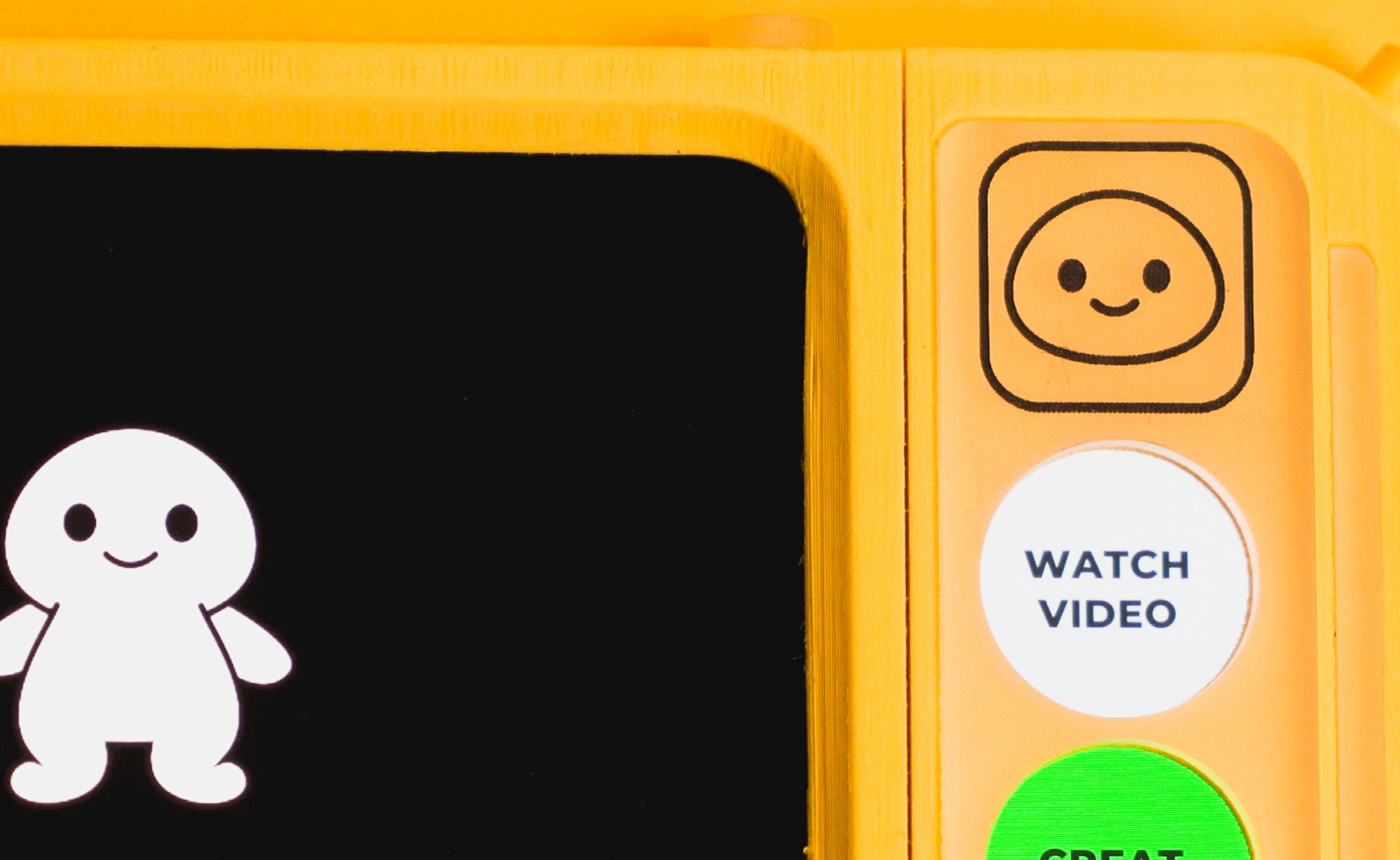
Merging all recorded scene
Merging all recorded scene
A video created by a mother and her son
A video created by a mother and her son
Process
Process
Process
Challenge
Challenge
Playing together helps parents and children build trust and share meaningful moments. It also helps children develop communication skills and better understand the world around them. However, smartphones often get in the way. When used individually, they reduce shared playtime and can even lead to emotional conflict. Instead of forcefully taking smartphones away and adding to the tension, what if these devices could instead encourage play and offer creative ideas for parents and children to enjoy together?
Playing together helps parents and children build trust and share meaningful moments. It also helps children develop communication skills and better understand the world around them. However, smartphones often get in the way. When used individually, they reduce shared playtime and can even lead to emotional conflict. Instead of forcefully taking smartphones away and adding to the tension, what if these devices could instead encourage play and offer creative ideas for parents and children to enjoy together?
Playing together helps parents and children build trust and share meaningful moments. It also helps children develop communication skills and better understand the world around them. However, smartphones often get in the way. When used individually, they reduce shared playtime and can even lead to emotional conflict. Instead of forcefully taking smartphones away and adding to the tension, what if these devices could instead encourage play and offer creative ideas for parents and children to enjoy together?

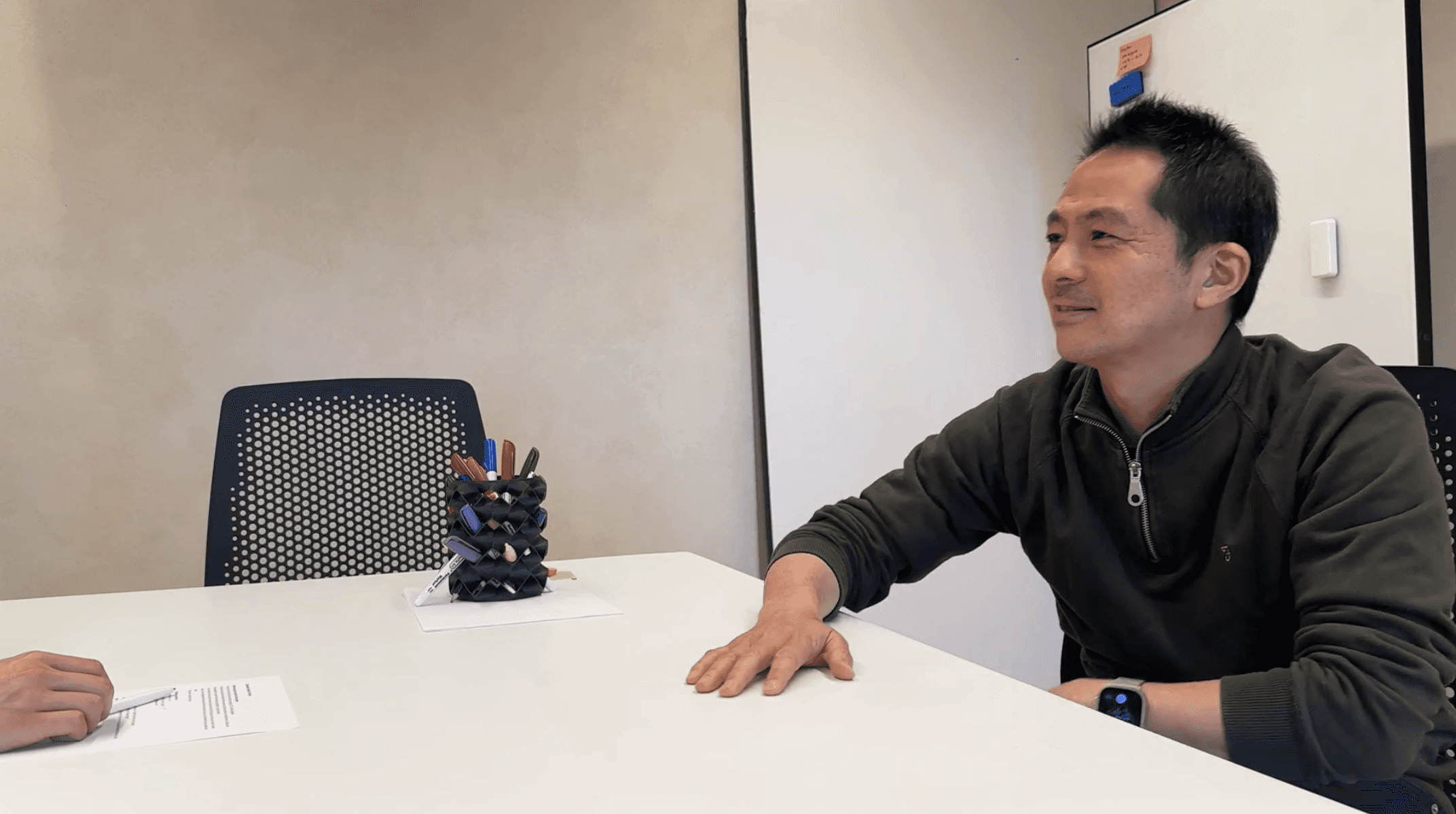
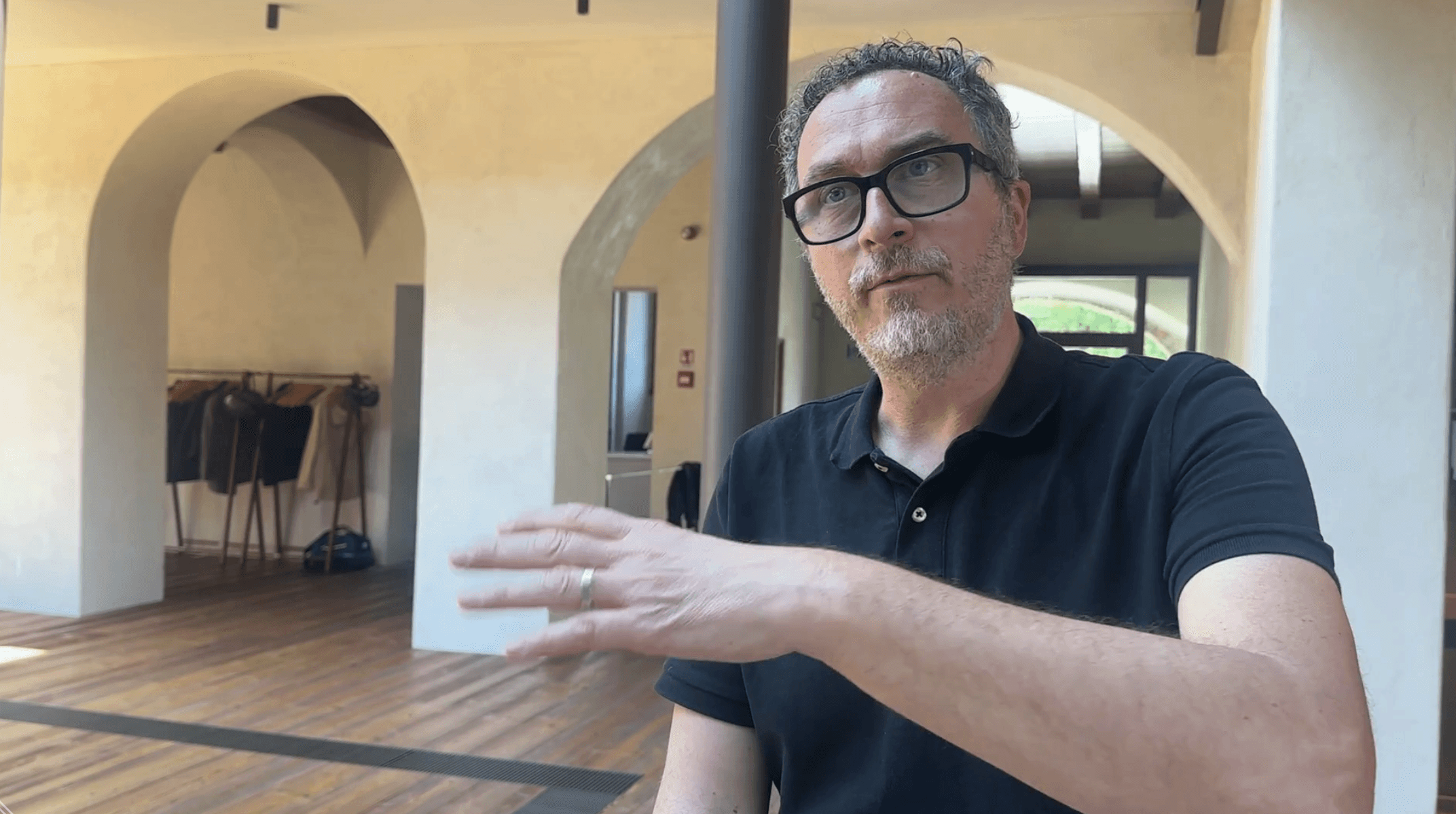
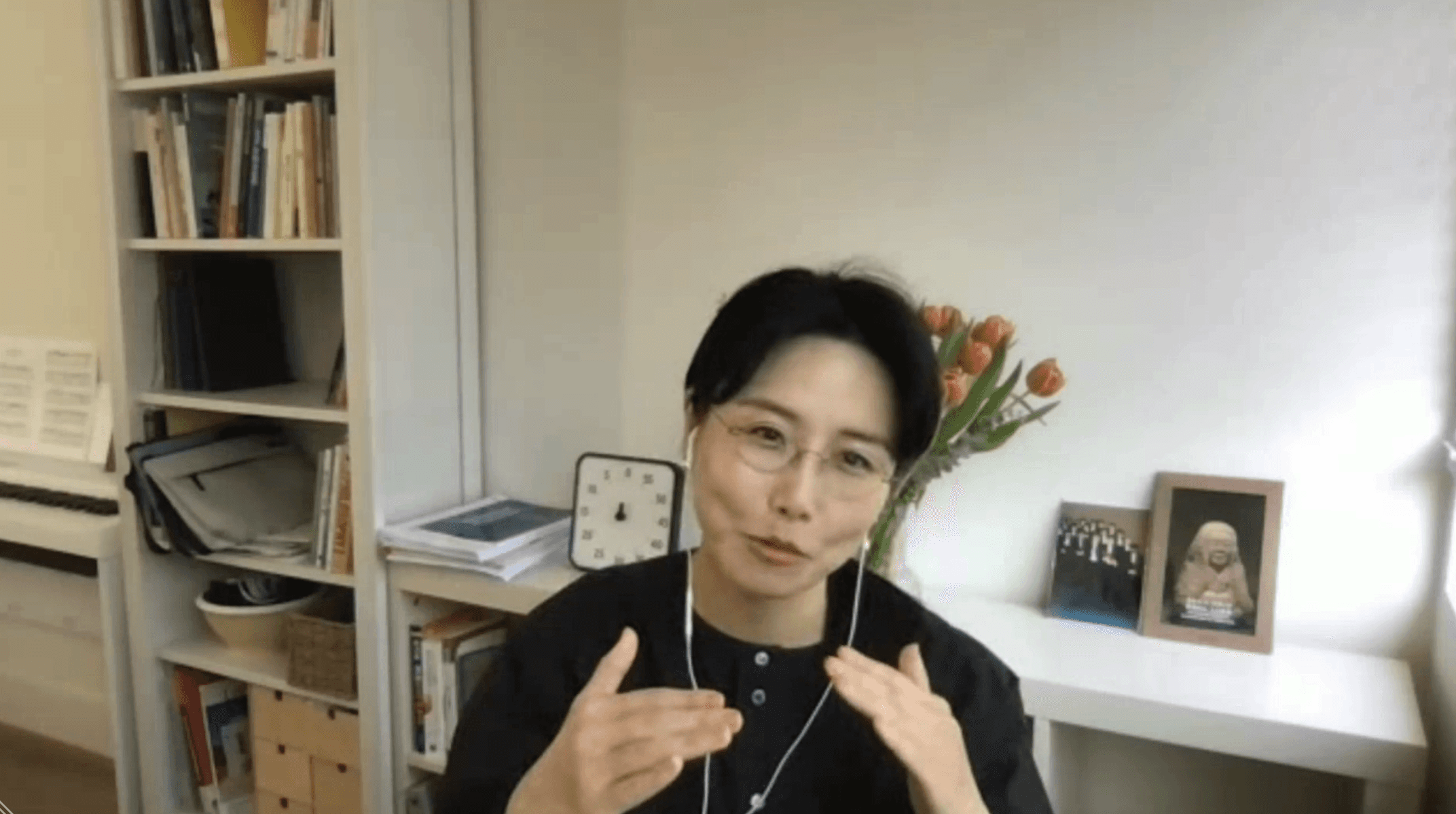
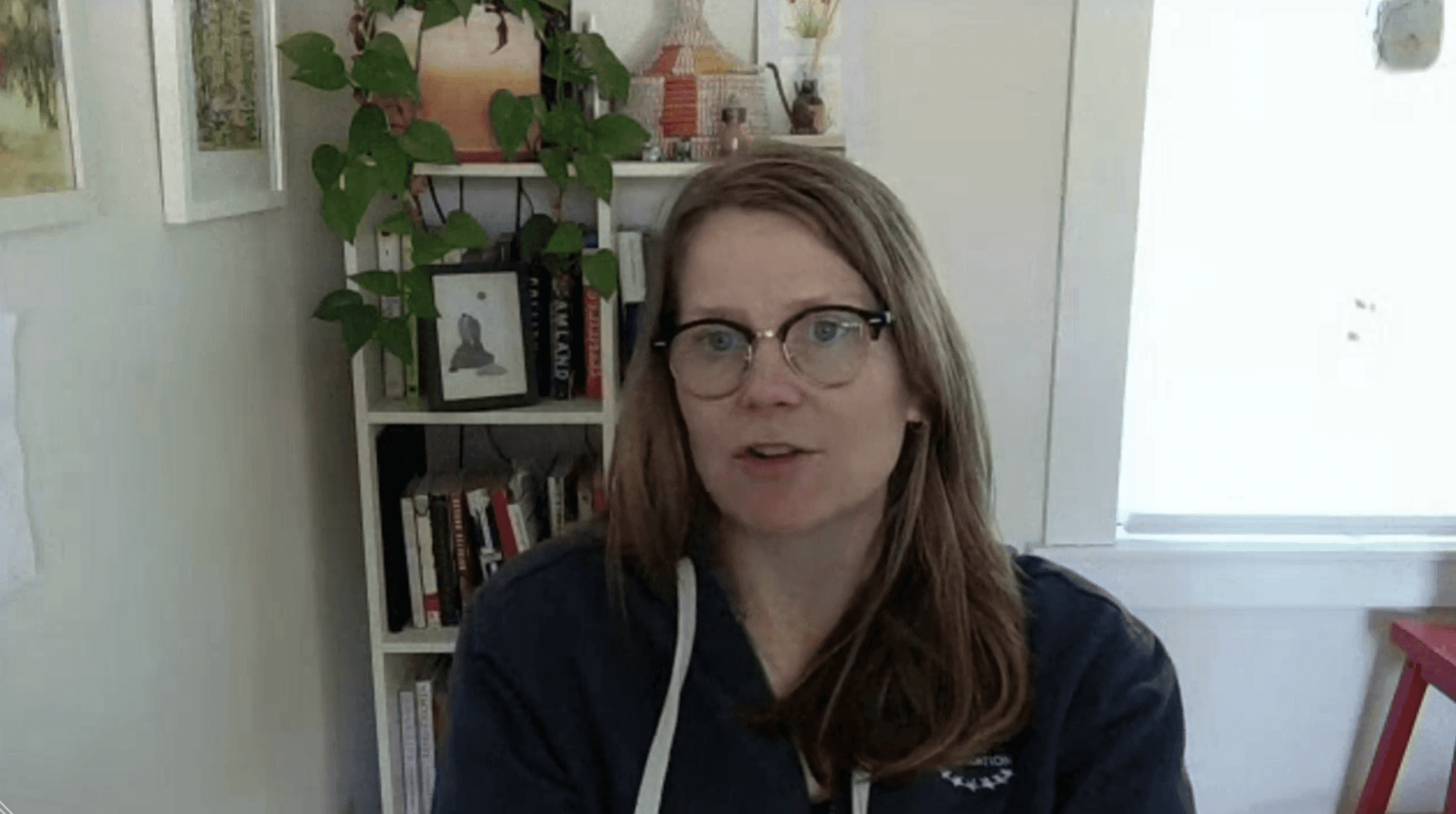

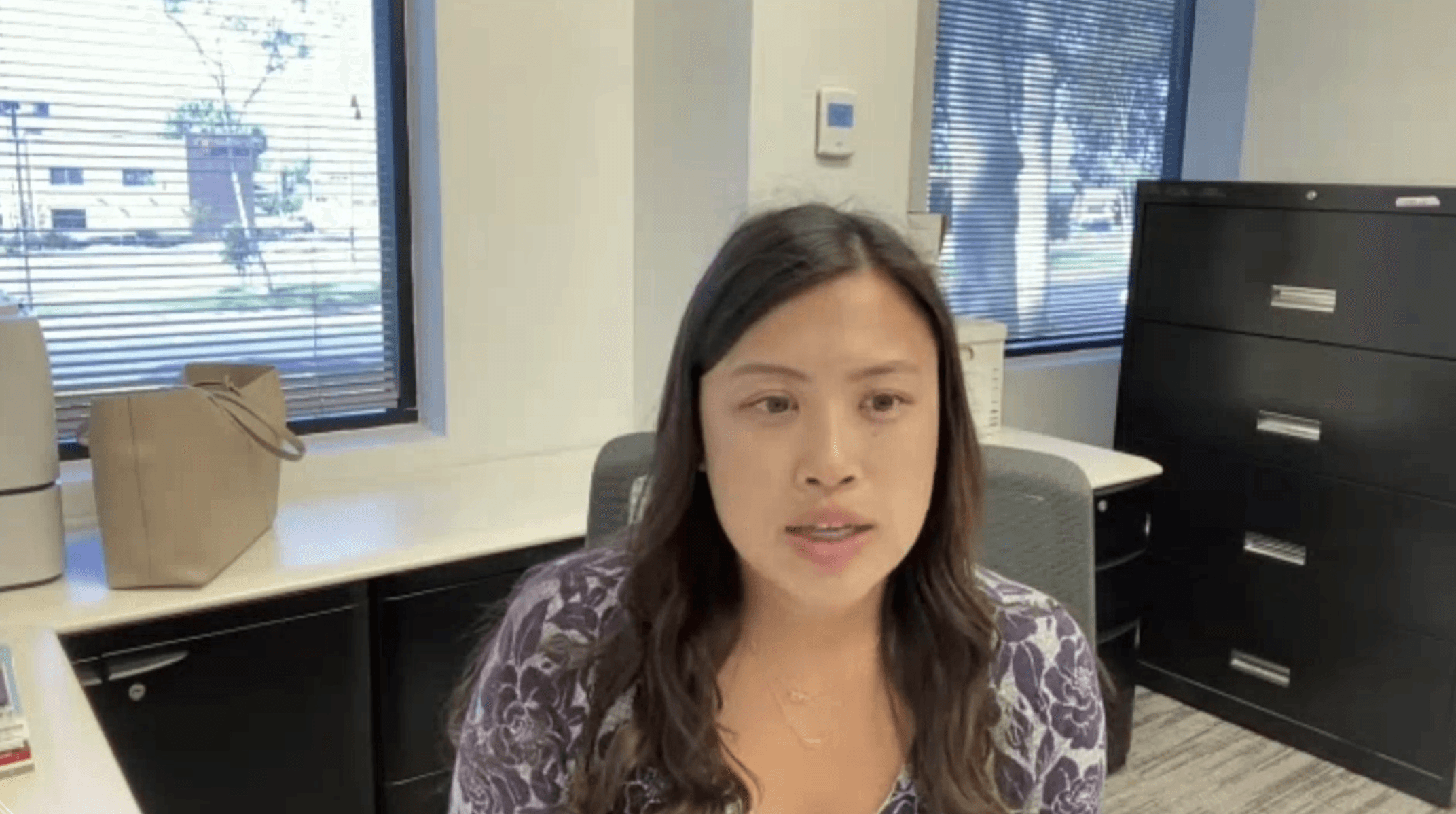
I interviewed seven parents and three teachers from Italy, Korea, Japan, Costa Rica, Denmark, and the U.S. about children’s smartphone use, shared play, related challenges, and future concerns. These conversations revealed diverse family experiences and led to three key insights.
I interviewed seven parents and three teachers from Italy, Korea, Japan, Costa Rica, Denmark, and the U.S. about children’s smartphone use, shared play, related challenges, and future concerns. These conversations revealed diverse family experiences and led to three key insights.
I interviewed seven parents and three teachers from Italy, Korea, Japan, Costa Rica, Denmark, and the U.S. about children’s smartphone use, shared play, related challenges, and future concerns. These conversations revealed diverse family experiences and led to three key insights.
1 Many parents lack play ideas
"Sometimes I just don't know what to do or how to play, I'd be so grateful for any prompts or ideas" (A mother in U.S.)
2 Smartphones create friction between parents and kids
"My oldest sometimes says he feels unfortunate to be in a family with screen limits, which makes me feel disconnected" (A mother in Italy)
3 Play can feel boring and repetitive for parents
"If she asked me to play Lego, I can do it, but after half an hour, I'm like done with this" (A mother in Costa Rica)
"Sometimes I feel bored when I play with my daughter because It's repetitive and simple" (A mother in Republic of Korea)
Many parents lack play ideas
"Sometimes I just don't know what to do or how to play, I'd be so grateful for any prompts or ideas" (A mother in U.S.)
Smartphones create friction between parents and kids
"My oldest sometimes says he feels unfortunate to be in a family with screen limits, which makes me feel disconnected" (A mother in Italy)
Play can feel boring and repetitive for parents
"If she asked me to play Lego, I can do it, but after half an hour, I'm like done with this" (A mother in Costa Rica)
"Sometimes I feel bored when I play with my daughter because It's repetitive and simple" (A mother in Republic of Korea)
Many parents lack play ideas
"Sometimes I just don't know what to do or how to play, I'd be so grateful for any prompts or ideas" (A mother in U.S.)
Smartphones create friction between parents and kids
"My oldest sometimes says he feels unfortunate to be in a family with screen limits, which makes me feel disconnected" (A mother in Italy)
Play can feel boring and repetitive for parents
"If she asked me to play Lego, I can do it, but after half an hour, I'm like done with this" (A mother in Costa Rica)
"Sometimes I feel bored when I play with my daughter because It's repetitive and simple" (A mother in Republic of Korea)
How Might We
use smartphone as a mediator to inspire parent-child play and encourage them to reflect on their experiences together, so that they can build stronger emotional bonds and develop better communication habits?
How Might We
use smartphone as a mediator to inspire parent-child play and encourage them to reflect on their experiences together, so that they can build stronger emotional bonds and develop better communication habits?
IDEA BOX
CONVERSATION PROMOTER
Based on the three insights, I utilized the How Might We (HMW) technique to establish a specific design direction
How Might We
use smartphone as a mediator to inspire parent-child play and encourage them to reflect on their experiences together, so that they can build stronger emotional bonds and develop better communication habits?
IDEA BOX
CONVERSATION PROMOTER
Based on the three insights, I utilized the How Might We (HMW) technique to establish a specific design direction
Based on the three insights, I utilized the How Might We (HMW) technique to establish a specific design direction
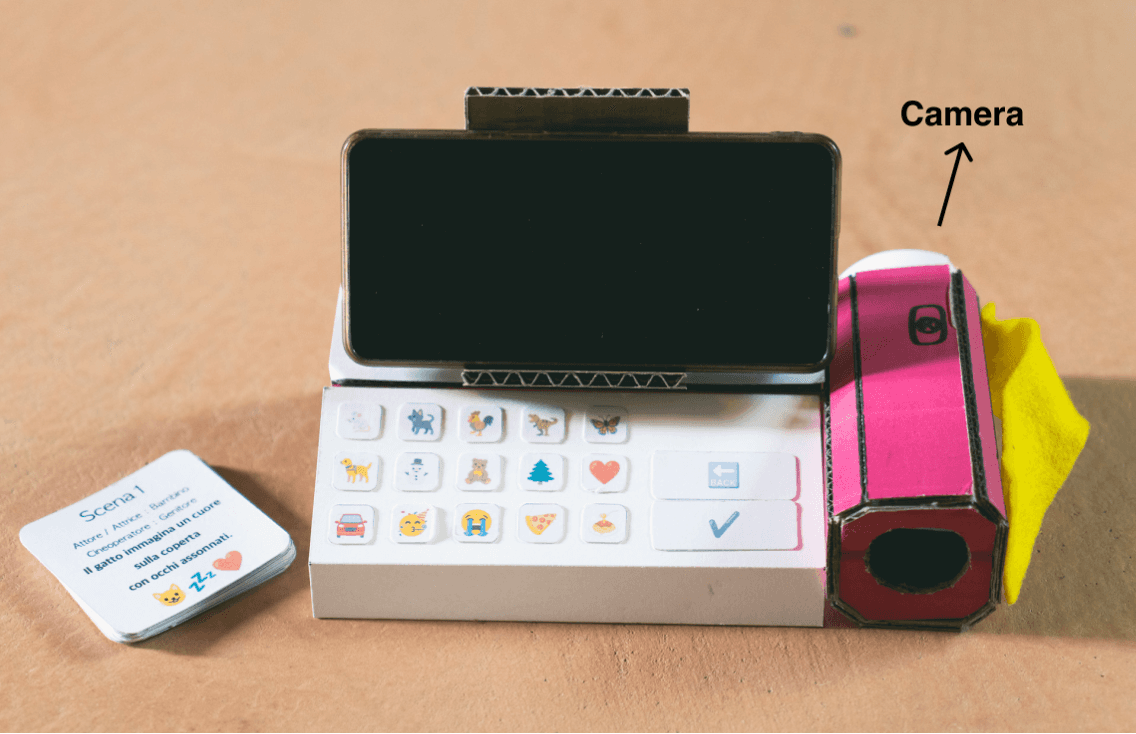
How the initial prototype works
How the initial prototype works
How the initial prototype works
Put phone on the dock
Put phone on the dock
Select emojis
Select emojis
AI generates stories
AI generates stories
Camera is activated
Camera is activated
Leave smartphone & Take camera
Leave smartphone & Take camera
Record the scenes
Record the scenes
Bring camera back to dock
Bring camera back to dock
Watch final video
Watch final video
I collaborated with fellow students to ideate through sketching and developed a storytelling based concept based on HMW statement
I collaborated with fellow students to ideate through sketching and developed a storytelling based concept based on HMW statement
I collaborated with fellow students to ideate through sketching and developed a storytelling based concept based on HMW statement
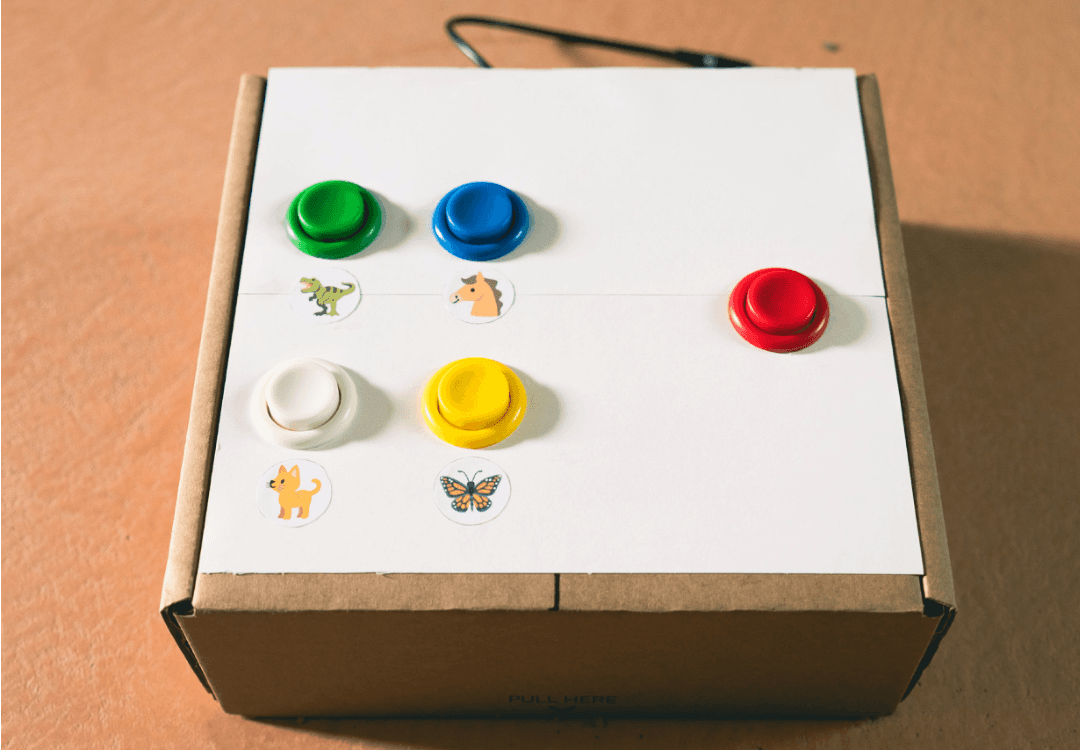
The implementation and core interaction of the first prototype, and for role-play, I utilized a Large Language Model (LLM) to generate story scenes based on a topic provided by the user. (Top-left video)
To make it more suitable for testing with children, I refined the idea so that instead of typing, users could select two emojis using buttons, and the system would generate a story related to those two emojis.
The implementation and core interaction of the first prototype, and for role-play, I utilized a Large Language Model (LLM) to generate story scenes based on a topic provided by the user. (A video on the top)
To make it more suitable for testing with children, I refined the idea so that instead of typing, users could select two emojis using buttons, and the system would generate a story related to those two emojis.
The implementation and core interaction of the first prototype, and for role-play, I utilized a Large Language Model (LLM) to generate story scenes based on a topic provided by the user. (A video on the top)
To make it more suitable for testing with children, I refined the idea so that instead of typing, users could select two emojis using buttons, and the system would generate a story related to those two emojis.
Through testing with 5 years old kids and their teacher at a kindergarten(Asilo Nido Valsecchi) in Bergamo, I learned that children need clear guidance on how to act, tend to lose their interest while waiting for scene generation and merging, and often struggle to understand AI-generated scenes and written instructions.
Verbal guidance from teachers and audio support proved essential for maintaining engagement and comprehension.
Through testing with 5 years old kids and their teacher at a kindergarten(Asilo Nido Valsecchi) in Bergamo, I learned that children need clear guidance on how to act, tend to lose their interest while waiting for scene generation and merging, and often struggle to understand AI-generated scenes and written instructions.
Verbal guidance from teachers and audio support proved essential for maintaining engagement and comprehension.
Through testing with 5 years old kids and their teacher at a kindergarten(Asilo Nido Valsecchi) in Bergamo, I learned that children need clear guidance on how to act, tend to lose their interest while waiting for scene generation and merging, and often struggle to understand AI-generated scenes and written instructions.
Verbal guidance from teachers and audio support proved essential for maintaining engagement and comprehension.
Before incorporating the insights gathered from the kindergarten, the features were implemented on a smartphone. However, two questions arose:
“Is this box just for selecting an emoji?”
“Even if there's a separate camera, someone could still take the smartphone placed on it”
Before incorporating the insights gathered from the kindergarten, the features were implemented on a smartphone. However, two questions arose:
“Is this box just for selecting an emoji?”
“Even if there's a separate camera, someone could still take the smartphone placed on it”
Before incorporating the insights gathered from the kindergarten, the features were implemented on a smartphone. However, two questions arose:
“Is this box just for selecting an emoji?”
“Even if there's separate camera, someone could still take the smartphone placed on it”
These two questions led to a major change in the form factor and were inspired by the "Aperture" project from Special Project. I believed that placing a constraint on the smartphone screen is something the user must choose to do, but once that constraint is in place, the resulting friction is quite strong.
These two questions led to a major change in the form factor and were inspired by the "Aperture" project from Special Project. I believed that placing a constraint on the smartphone screen is something the user must choose to do, but once that constraint is in place, the resulting friction is quite strong.
These two questions led to a major change in the form factor and were inspired by the "Aperture" project from Special Project. I believed that placing a constraint on the smartphone screen is something the user must choose to do, but once that constraint is in place, the resulting friction is quite strong.
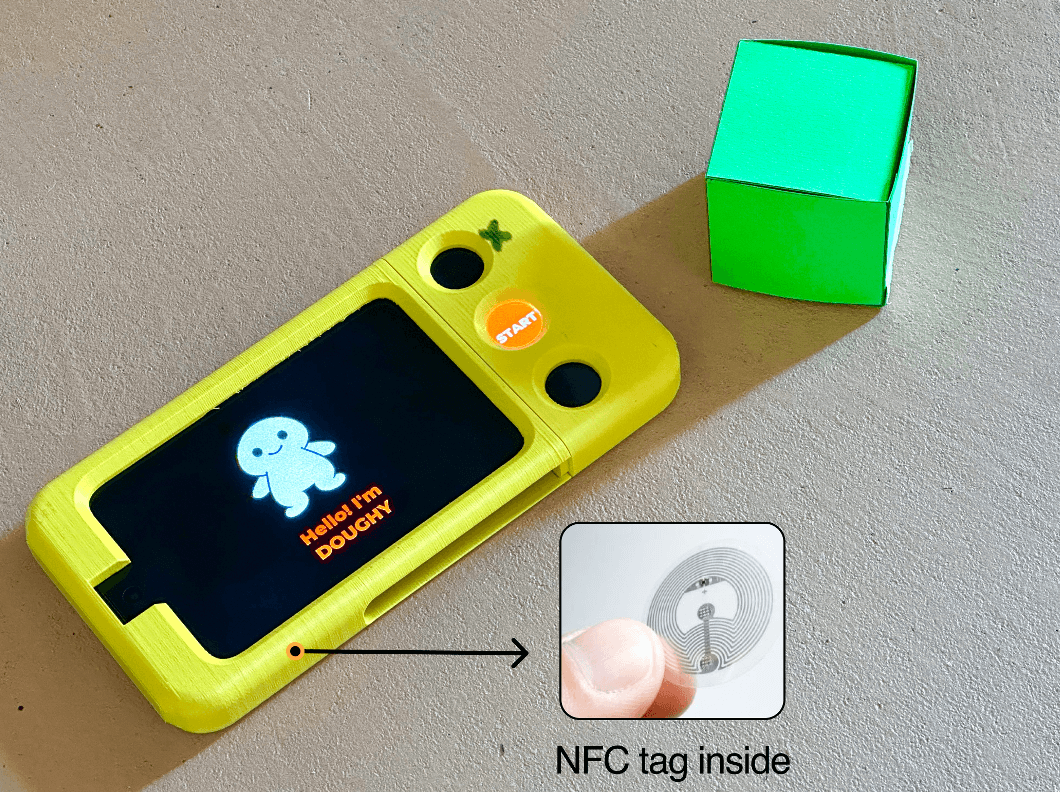
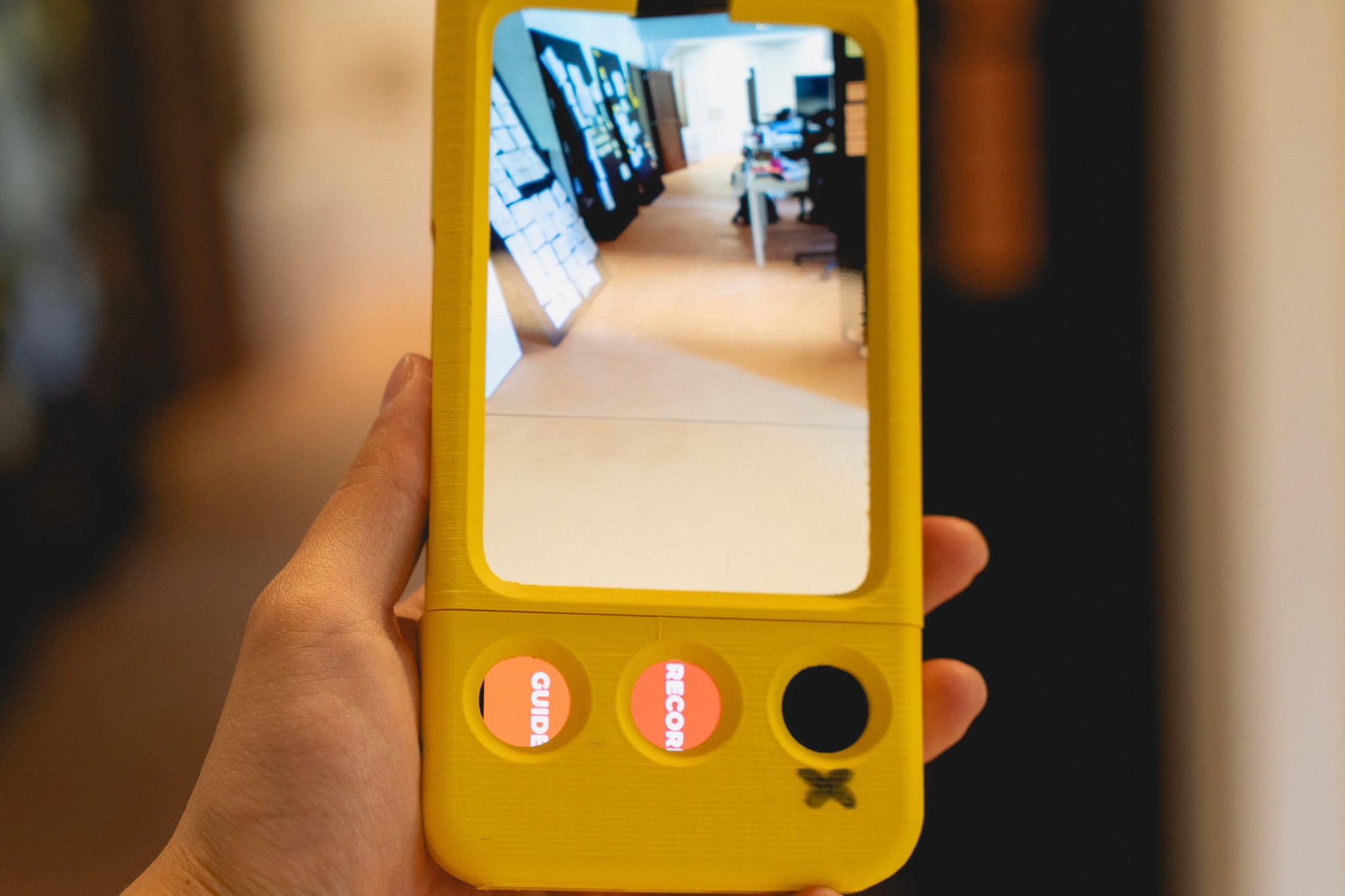
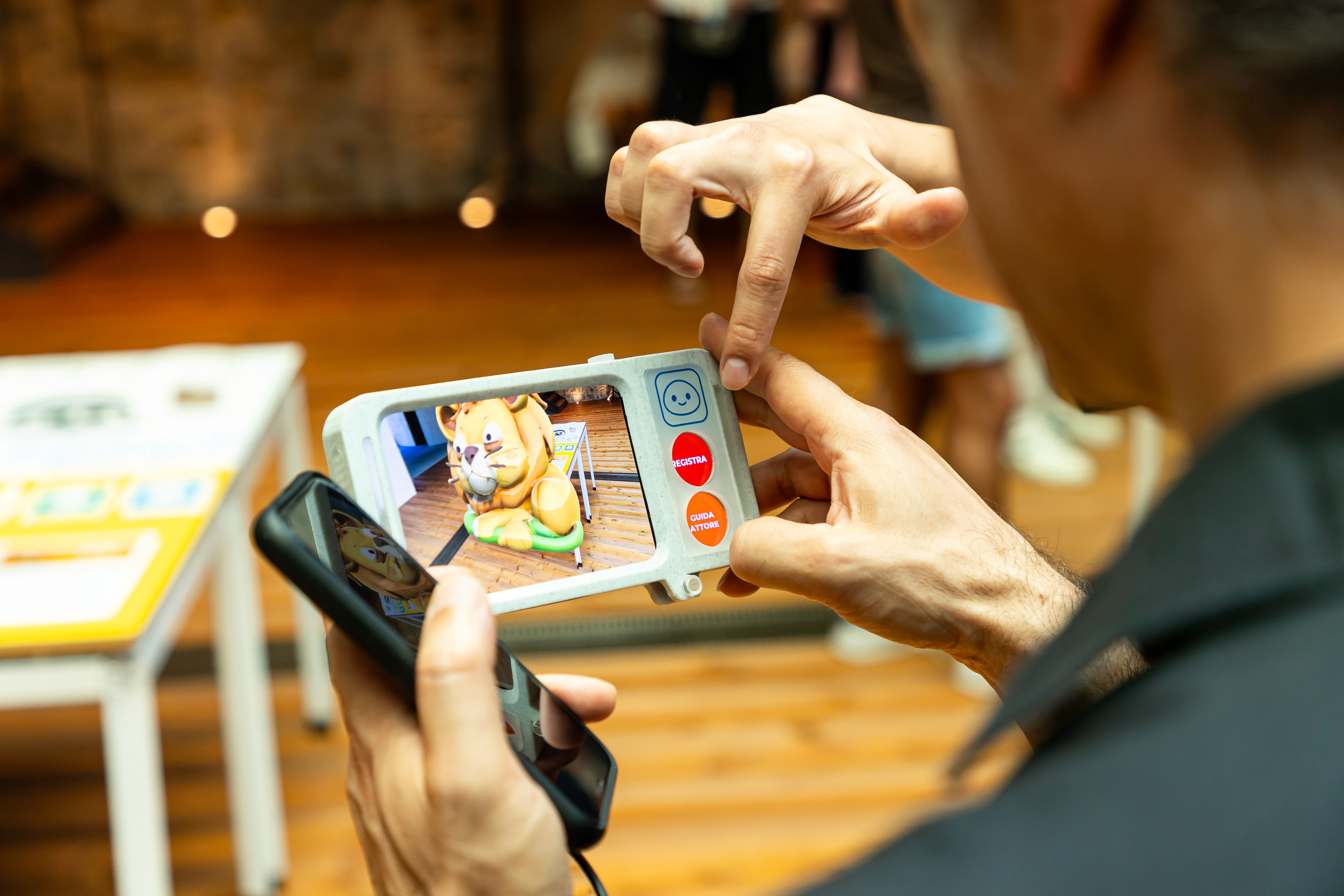
The form factor was redefined based on inspiration from Aperture. An NFC chip was embedded into a 3D-printed case to automatically link to the video generator app. Additionally, I came up with the idea of AR props that could be used during video recording, and developed the app using Unity to implement this feature.
The form factor was redefined based on inspiration from Aperture. An NFC chip was embedded into a 3D-printed case to automatically link to the video generator app. Additionally, I came up with the idea of AR props that could be used during video recording, and developed the app using Unity to implement this feature.
The form factor was redefined based on inspiration from Aperture. An NFC chip was embedded into a 3D-printed case to automatically link to the video generator app. Additionally, I came up with the idea of AR props that could be used during video recording, and developed the app using Unity to implement this feature.
Since AI generated stories were unreliable for young children, I developed a single scripted story based on children’s storytelling contests on YouTube, using AI only for image and voice generation. Kindergarten testing insights also informed the addition of a conversation promoter and acting guides to reduce waiting time boredom and support storytelling
Since AI generated stories were unreliable for young children, I developed a single scripted story based on children’s storytelling contests on YouTube, using AI only for image and voice generation. Kindergarten testing insights also informed the addition of a conversation promoter and acting guides to reduce waiting time boredom and support storytelling
Since AI generated stories were unreliable for young children, I developed a single scripted story based on children’s storytelling contests on YouTube, using AI only for image and voice generation. Kindergarten testing insights also informed the addition of a conversation promoter and acting guides to reduce waiting time boredom and support storytelling


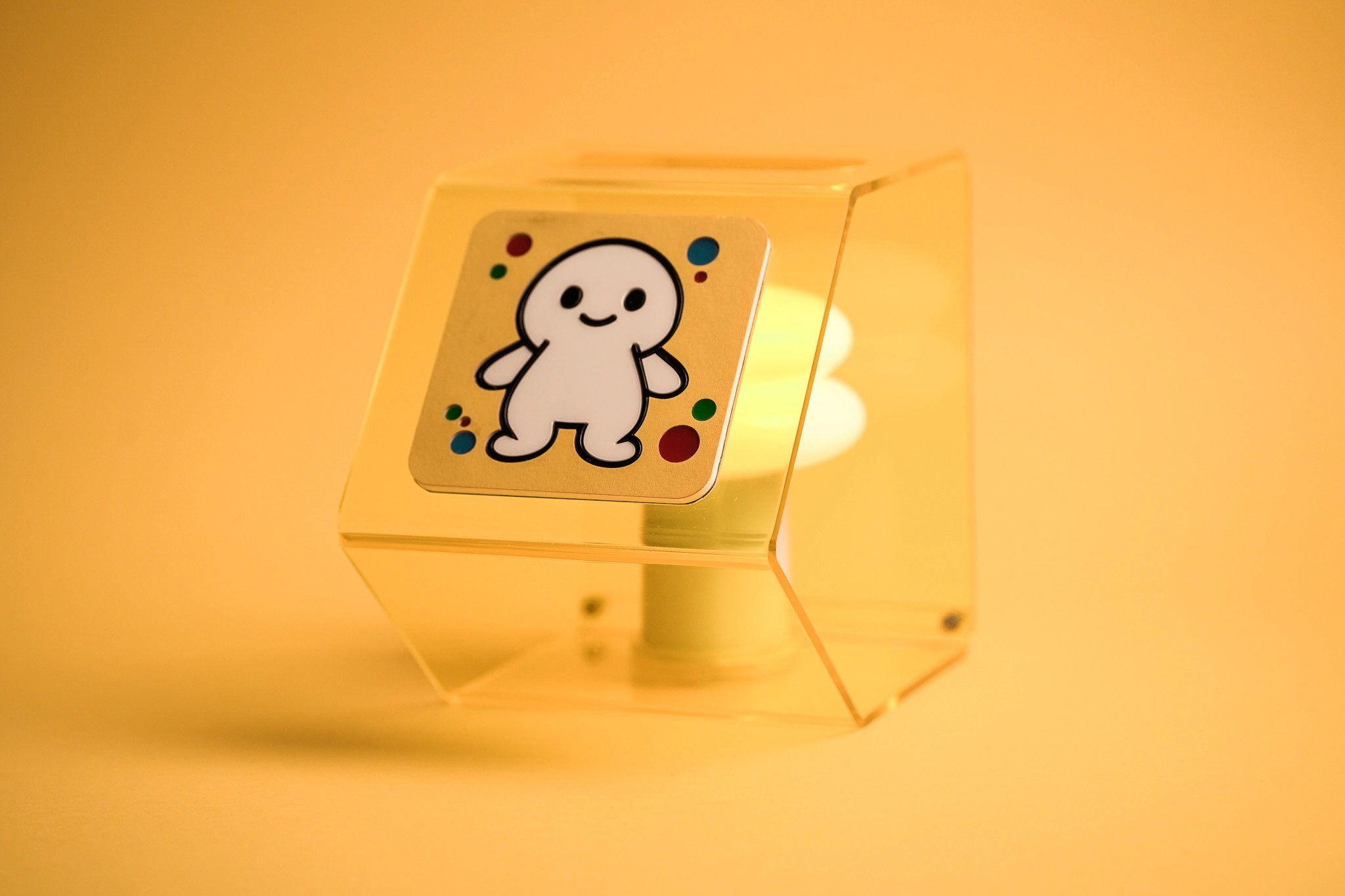
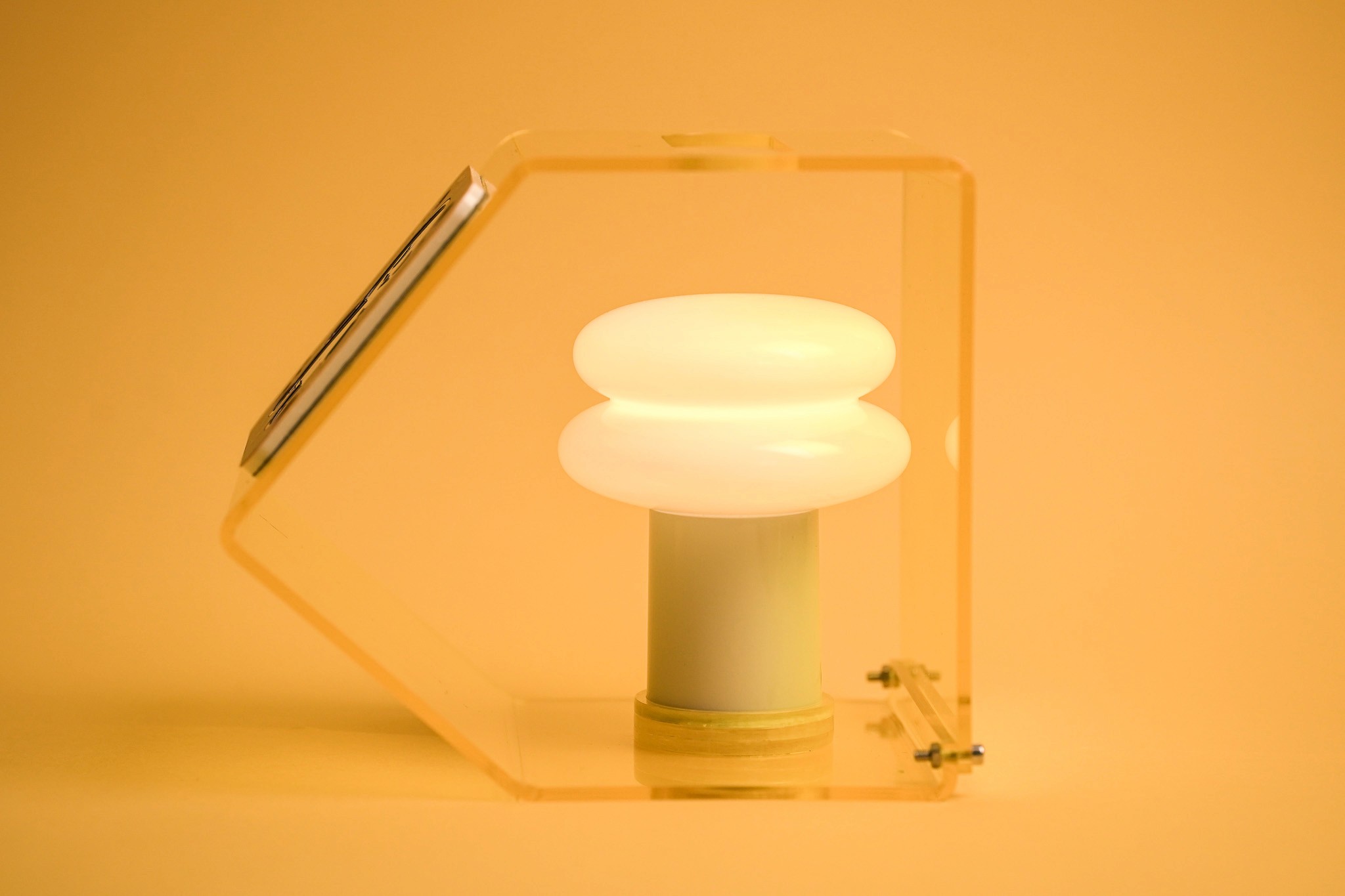
The lamp with Doughy's image attached can be used as a prop to summon an AR 3D object. Before recording a video, when the image is scanned with the camera, a 3D object appears on top of it using an image tracking. Rather than being used solely as a simple prop for Doughy, the lamp was added to help it become a functional everyday item.
The lamp with Doughy's image attached can be used as a prop to summon an AR 3D object. Before recording a video, when the image is scanned with the camera, a 3D object appears on top of it using an image tracking. Rather than being used solely as a simple prop for Doughy, the lamp was added to help it become a functional everyday item.
The lamp with Doughy's image attached can be used as a prop to summon an AR 3D object. Before recording a video, when the image is scanned with the camera, a 3D object appears on top of it using an image tracking. Rather than being used solely as a simple prop for Doughy, the lamp was added to help it become a functional everyday item.

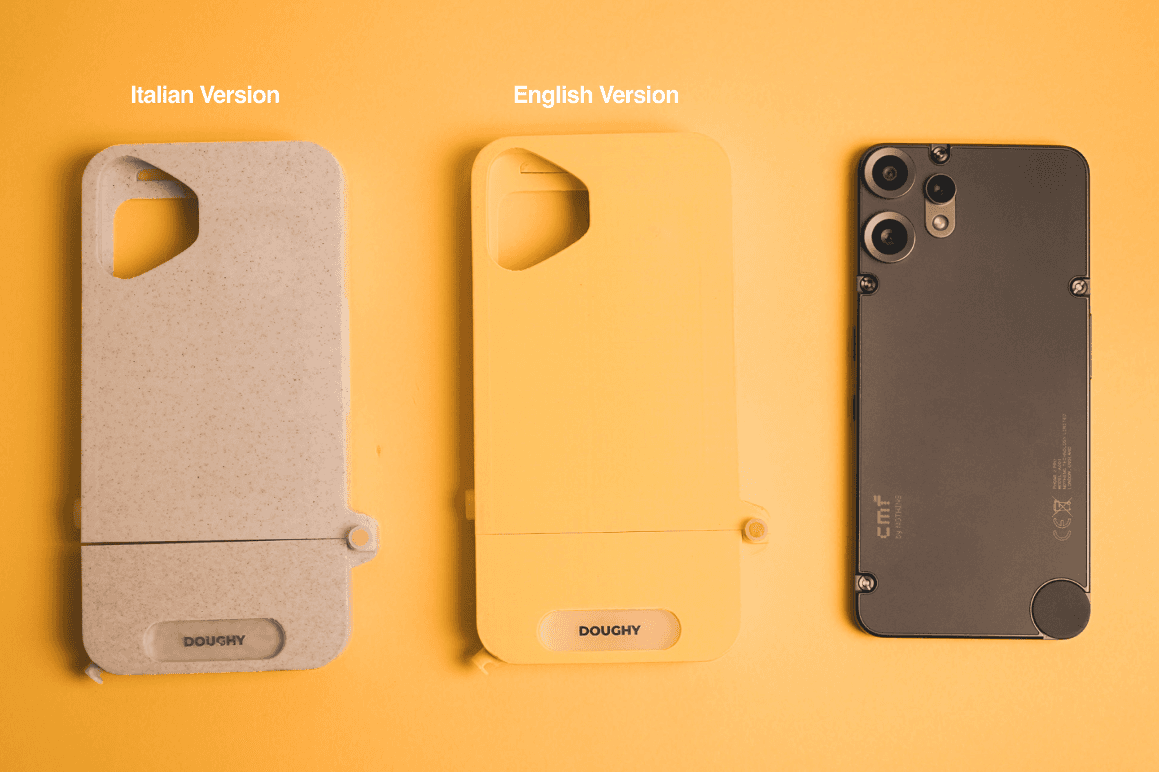
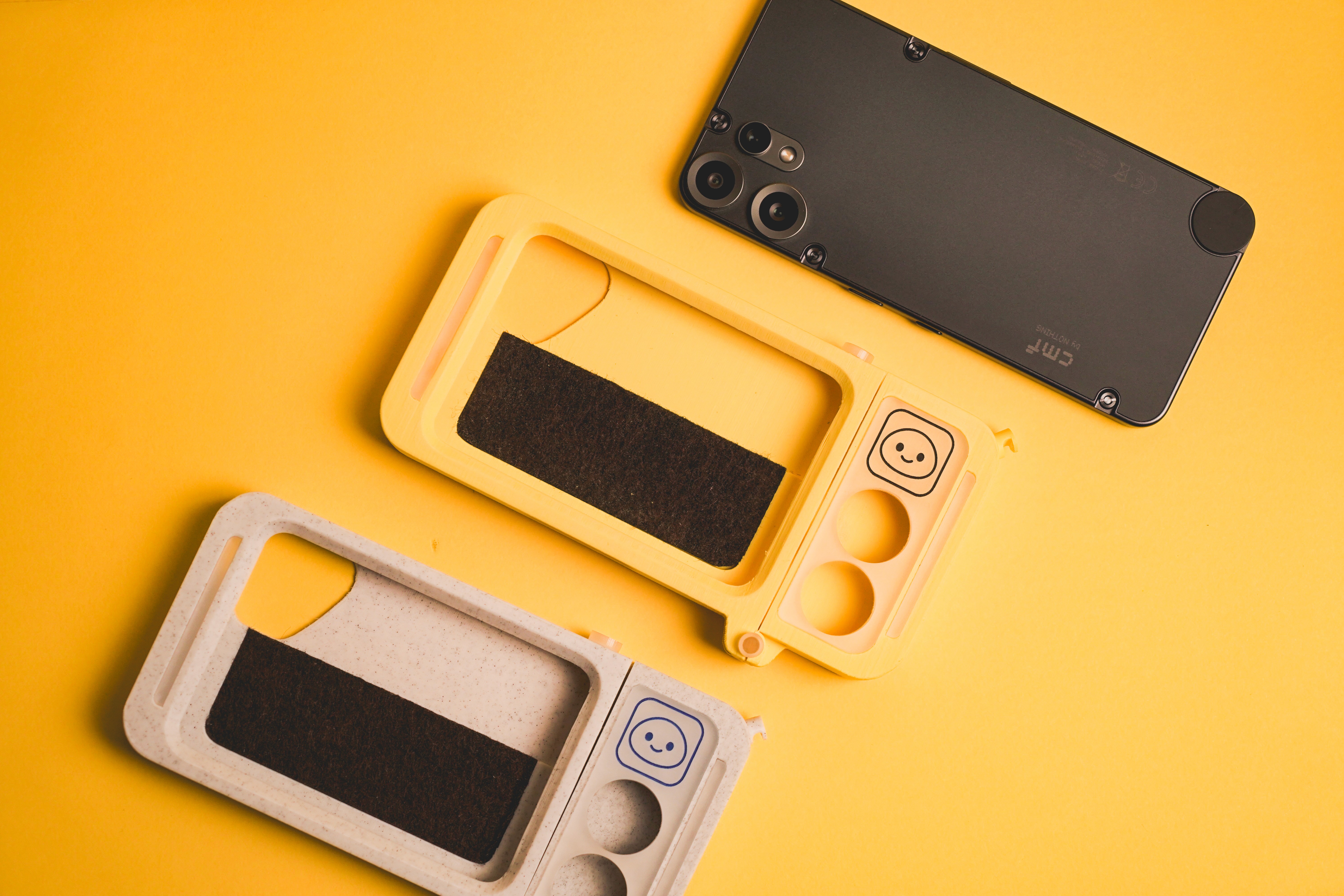
A separate Italian version was created for visitors from Italy attending the exhibition. At the exhibition, I met many supporters of Doughy, including children, parents, and babysitters. We received a lot of positive feedback, especially from parents who felt it would be helpful due to their lack of ideas for play. The cute Doughy character itself was especially popular among the children.
A separate Italian version was created for visitors from Italy attending the exhibition. At the exhibition, I met many supporters of Doughy, including children, parents, and babysitters. We received a lot of positive feedback, especially from parents who felt it would be helpful due to their lack of ideas for play. The cute Doughy character itself was especially popular among the children.
A separate Italian version was created for visitors from Italy attending the exhibition. At the exhibition, I met many supporters of Doughy, including children, parents, and babysitters. We received a lot of positive feedback, especially from parents who felt it would be helpful due to their lack of ideas for play. The cute Doughy character itself was especially popular among the children.
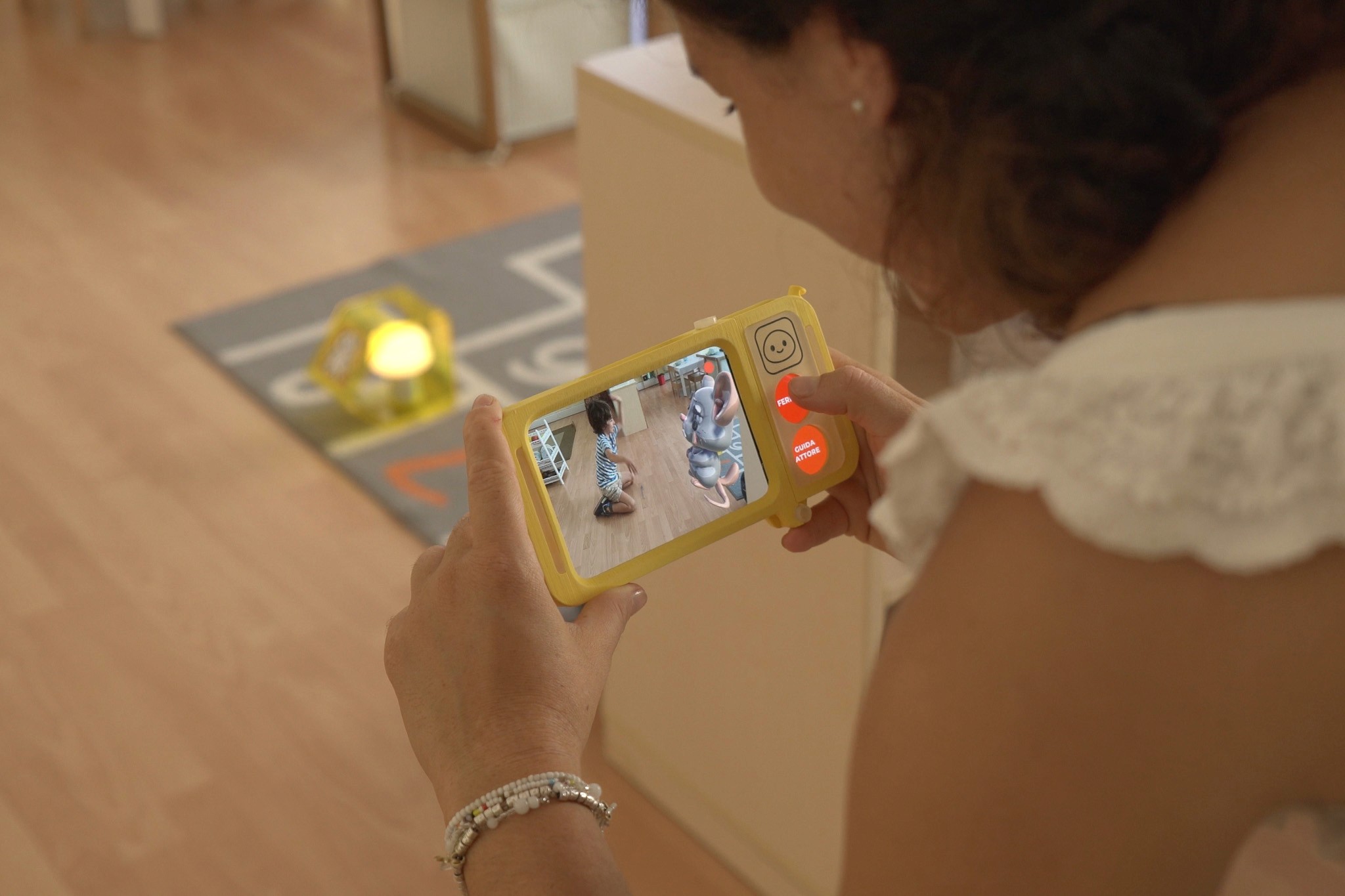
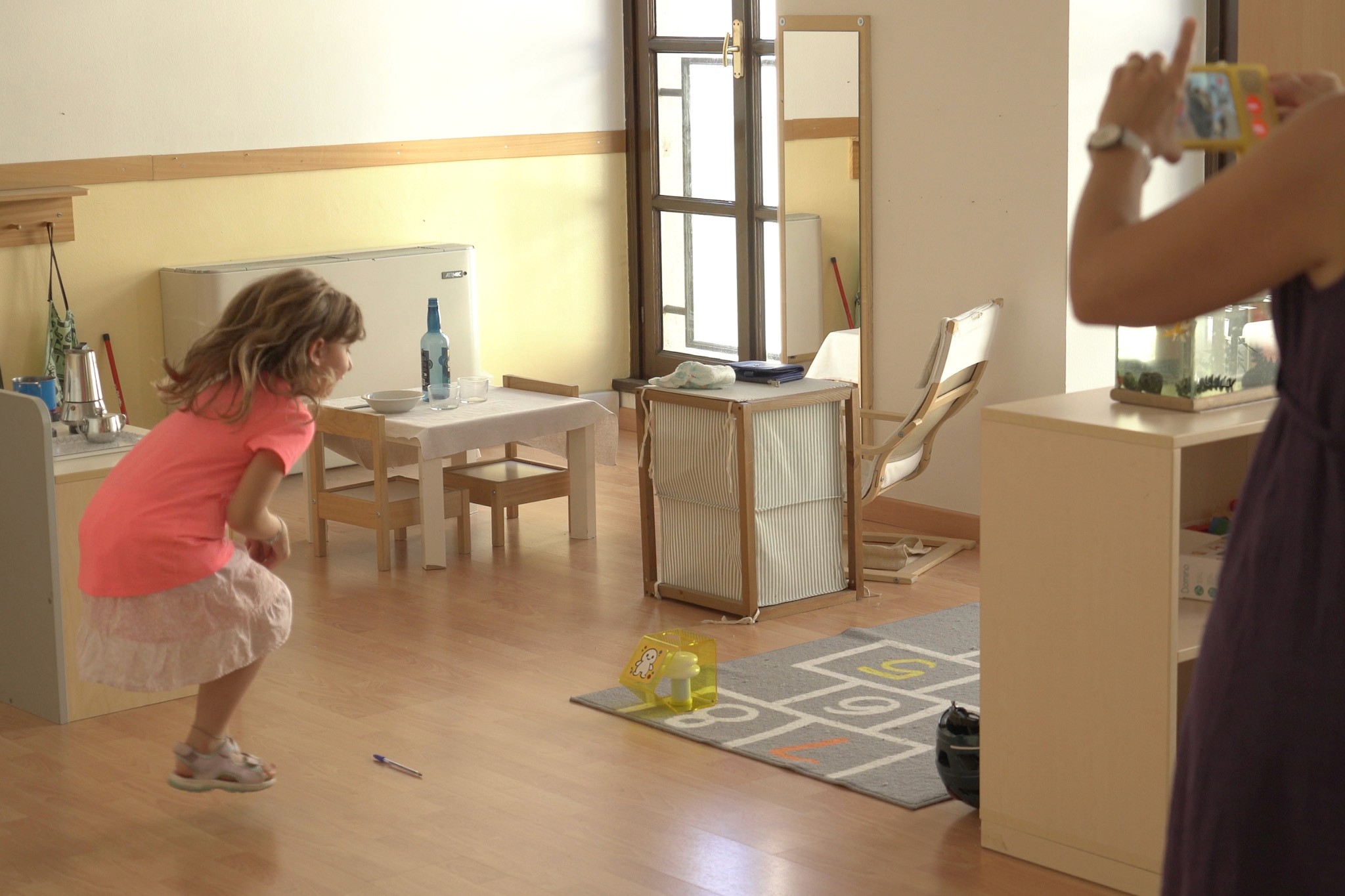
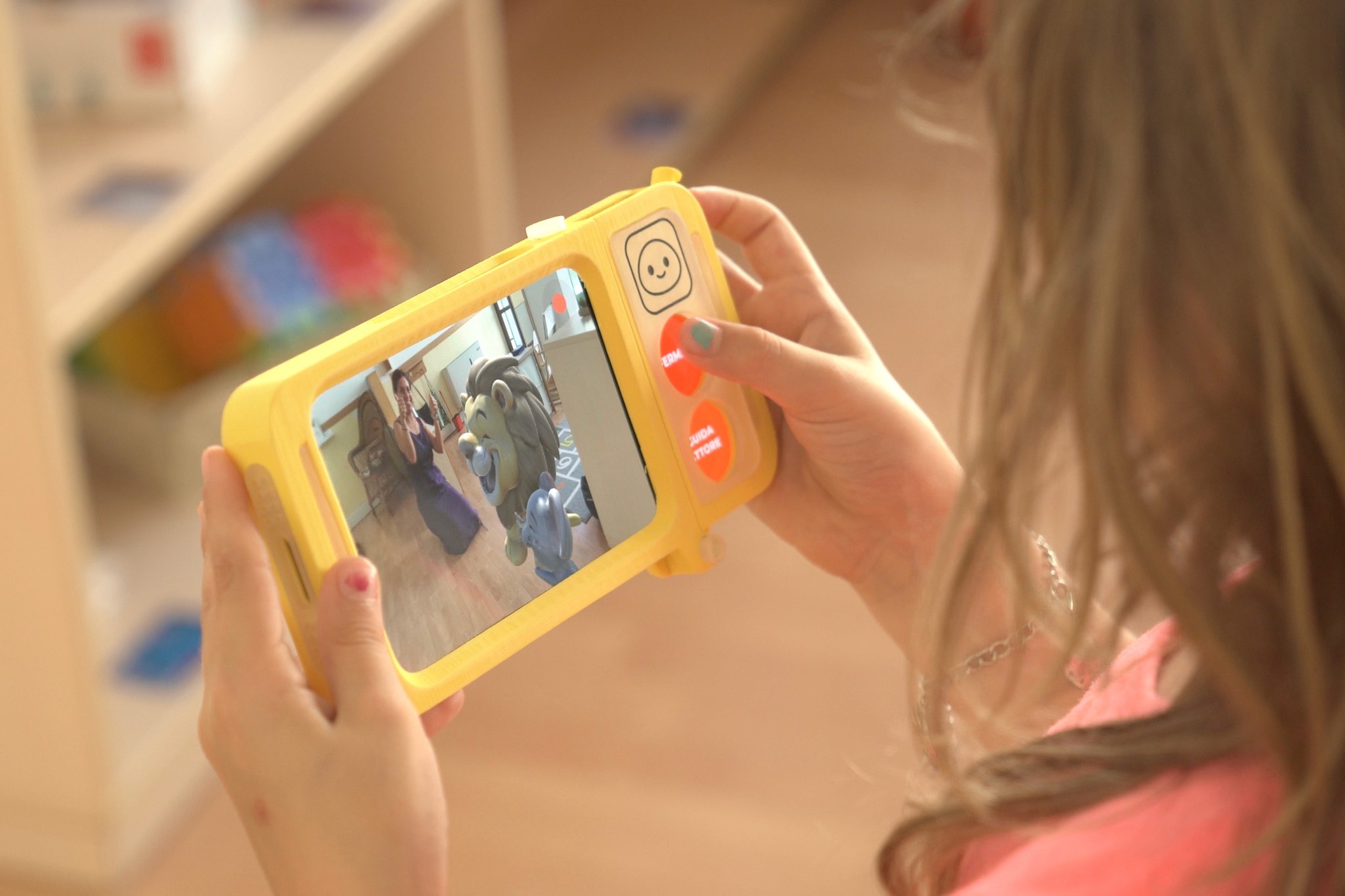

I conducted a test at a kindergarten with parents, teachers, and children (age 5). At first, they were unfamiliar with using AR objects, but after about five minutes of practice, they began using Doughy on their own without my instructions and started creating videos together. One 5-year-old girl, in particular, who enjoyed role-playing and acting, came up with her own ideas and proudly performed them.
I conducted a test at a kindergarten with parents, teachers, and children (age 5). At first, they were unfamiliar with using AR objects, but after about five minutes of practice, they began using Doughy on their own without my instructions and started creating videos together. One 5-year-old girl, in particular, who enjoyed role-playing and acting, came up with her own ideas and proudly performed them.
I conducted a test at a kindergarten with parents, teachers, and children (age 5). At first, they were unfamiliar with using AR objects, but after about five minutes of practice, they began using Doughy on their own without my instructions and started creating videos together. One 5-year-old girl, in particular, who enjoyed role-playing and acting, came up with her own ideas and proudly performed them.
Future works
Future works
Although the 3D object is anchored to the Doughy lamp, there were occasional issues with users stepping into the AR object due to difficulty in judging its size. For future steps, I’d like to test features such as projection mapping (e.g., projecting a lion’s shadow to suggest size) or a split-screen function that allows two people to appear simultaneously in a comic book-style layout. Also, although the current prototype includes stories for only two people, I want to develop ideas that allow 3,4 people or even an entire family or extended relatives to create a video together.
Although the 3D object is anchored to the Doughy lamp, there were occasional issues with users stepping into the AR object due to difficulty in judging its size. For future steps, I’d like to test features such as projection mapping (e.g., projecting a lion’s shadow to suggest size) or a split-screen function that allows two people to appear simultaneously in a comic book-style layout. Also, although the current prototype includes stories for only two people, I want to develop ideas that allow 3,4 people or even an entire family or extended relatives to create a video together.
Although the 3D object is anchored to the Doughy lamp, there were occasional issues with users stepping into the AR object due to difficulty in judging its size. For future steps, I’d like to test features such as projection mapping (e.g., projecting a lion’s shadow to suggest size) or a split-screen function that allows two people to appear simultaneously in a comic book-style layout. Also, although the current prototype includes stories for only two people, I want to develop ideas that allow 3,4 people or even an entire family or extended relatives to create a video together.
Impact I hope
Impact I hope
Just like how I cherish the video from my own childhood(below), I hope that when the child and parent look back on the videos they recorded together after some time has passed, they can feel how precious their family is and how happy they were together.
Just like how I cherish the video from my own childhood(below), I hope that when the child and parent look back on the videos they recorded together after some time has passed, they can feel how precious their family is and how happy they were together.
Just like how I cherish the video from my own childhood(below), I hope that when the child and parent look back on the videos they recorded together after some time has passed, they can feel how precious their family is and how happy they were together.